

Most budgeting advice assumes you have money left over to divide up. When your income barely covers the bills, rules like “put 20% in savings” can feel like they were written for someone else. A budget on a tight income has a different job: making sure the most important bills get paid first, cutting surprises, and finding the small amounts that, over time, give you some breathing room.
This step-by-step guide shows you how to build that kind of budget, how to plan paycheck by paycheck, where people on tight budgets usually find savings, and what to do if the numbers still don’t add up.
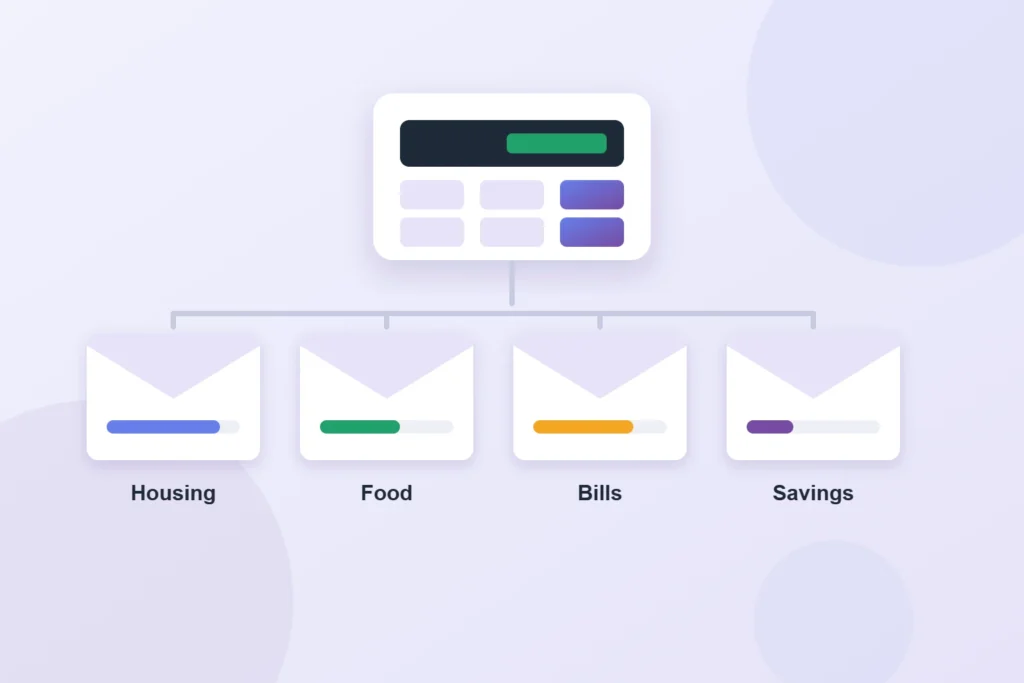
Step 1: Write down your real take-home pay
Start with what actually lands in your bank account, not your salary before taxes. Include every source: paychecks, child support, benefits, and side work.
- Steady paychecks: list each one with the date it usually arrives.
- Irregular income (tips, gig work, seasonal jobs): look at the last three to six months and use your lowest month as your planning number. Anything above that is a bonus that goes to savings or debt.
- Benefits: count SNAP, child care help, or housing assistance as reductions to the bills they cover, so you don’t count them twice.
Step 2: List every bill and when it’s due
Go through the last two months of bank and card statements and write down every expense, with its due date. People on tight budgets often find that the problem isn’t the total, it’s the timing: rent and the car payment both due right before payday.
Don’t forget expenses that come once or twice a year, such as car registration, school supplies, or holiday gifts. Divide each by 12 to see what it costs per month.
Step 3: Rank your spending by priority
When money is short, the order you pay things matters. Most financial counselors recommend covering the essentials that protect your home, health, and ability to work first:
- Housing: rent or mortgage
- Utilities: electricity, heat, water
- Food
- Transportation to work: car payment, insurance, gas, or transit
- Child care and other costs that let you keep working
- Minimum payments on debts
- Everything else
A ranked list makes hard choices easier. If something has to wait, you’ll know it’s the item at the bottom, not the rent.
Step 4: Give every dollar a job
Here’s an example monthly budget for Monique, a single parent with one child who takes home $2,800 a month in two paychecks of $1,400:
| Category | Monthly amount | Share of take-home pay |
| Rent | $1,150 | 41% |
| Groceries | $450 | 16% |
| Gas and car insurance | $260 | 9% |
| Utilities and internet | $180 | 6% |
| Emergency savings | $180 | 6% |
| Child expenses (school, clothes) | $120 | 4% |
| Minimum debt payments | $120 | 4% |
| Annual costs set aside (registration, gifts, car repairs) | $80 | 3% |
| Personal and household items | $80 | 3% |
| Health costs (copays, prescriptions) | $70 | 3% |
| Phone | $60 | 2% |
| Fun money | $50 | 2% |
| Total | $2,800 | 100% |
Two lines stand out. First, savings is on the list even though money is tight. A small amount, set aside every month, is what stops the next car repair from turning into debt. Second, there’s a little fun money. A budget with no room for anything enjoyable is a budget most people abandon within a month.
Step 5: Plan paycheck by paycheck
A monthly budget can still fail if a big bill lands before payday. The fix is to assign each bill to a specific paycheck. Monique’s rent is due on the 1st, which would eat 82% of one paycheck, so she sets aside half of it from each check:
| Paycheck | Where the $1,400 goes |
| Paycheck 1 | Half of rent $575, groceries $225, gas and car insurance $260, utilities $180, phone $60, personal $40, fun $25, savings $35 |
| Paycheck 2 | Half of rent $575, groceries $225, debt payments $120, child expenses $120, annual costs $80, health $70, personal $40, fun $25, savings $145 |
Moving the rent money into a separate account the day it arrives keeps it from getting spent. If a due date never lines up with your paydays, call the company: many lenders, utilities, and card issuers will move a due date if you ask.
Step 6: Find savings where they usually hide
- Phone and internet: prepaid and smaller carriers often cost far less for the same network. If you receive SNAP, Medicaid, or certain other benefits, the FCC’s Lifeline program can lower your phone or internet bill.
- Car insurance: get quotes from at least three companies every year, and ask about raising your deductible once you have some emergency savings.
- Subscriptions and memberships: check your statements for charges you forgot about.
- Bank fees: overdraft and monthly maintenance fees add up. Many credit unions and online banks offer accounts with no monthly fee.
- Food: plan meals around what’s on sale, and check whether you qualify for food assistance. See our guide to SNAP benefits, and for more ideas, how to eat healthy on a tight budget.
- Energy bills: ask your utility about budget billing, which spreads costs evenly over the year, and check whether you qualify for LIHEAP energy assistance.
- Health coverage: if your income dropped, you may qualify for low-cost coverage. See our guide on Medicaid.
Step 7: Track for 30 days, then adjust
Your first budget will be wrong, and that’s normal. For one month, write down every purchase, in a notebook, a spreadsheet, or a free app. At the end of the month, compare what you planned with what you spent and adjust the numbers. The Consumer Financial Protection Bureau’s free “Your Money, Your Goals” toolkit includes worksheets that can help you get started.
If the numbers still don’t add up
Sometimes there’s simply not enough income for the essentials. If that’s where you are, these steps can help:
- Call creditors before you fall behind. The Federal Trade Commission advises contacting creditors early to ask for a lower payment or a payment plan. Many have hardship programs they don’t advertise.
- Check for benefits you may qualify for, including food, energy, housing, and health programs. Dialing 211 connects you to local help in most of the country.
- Look at housing costs. If rent takes more than half your income, it may be worth applying for assistance or exploring a move. Our guide to Section 8 housing explains how vouchers work.
- Talk to a nonprofit credit counselor. Reputable counselors review your whole budget, often for free or a small fee.
- Avoid expensive quick fixes like payday loans and stacking buy now, pay later plans. See our guide on using buy now, pay later safely.
4 budgeting mistakes to avoid
- Budgeting with your gross pay instead of take-home pay.
- Forgetting once-a-year bills, which then feel like emergencies.
- Cutting everything at once. Small, lasting cuts beat a strict plan you drop after two weeks.
- Not paying yourself anything. Even $10 per paycheck builds the habit. Our guide to building an emergency fund shows how small amounts grow.
Once your budget is steady, the next step is usually paying down high-interest balances. Our guide on how to pay off credit card debt walks you through it.
Sources
- Consumer Financial Protection Bureau, Your Money, Your Goals
- Federal Trade Commission, How To Get Out of Debt
- Federal Communications Commission, Lifeline program
About this guide: Telyf is an independent publication. We are not affiliated with any government agency, and this article is general information, not legal or financial advice. Rules can vary by state and change over time, so confirm the details with the official agency before making decisions.
About the Author

Vinícius Andrade writes about the practical side of personal growth — employee benefits, career moves, personal finance, and everyday wellbeing. He turns dense rules and jargon into steps anyone can act on, so readers spend less time decoding fine print and more time making decisions that actually improve their lives.
