

Some stress is a normal part of life. A deadline, a tough conversation, or an unexpected bill can make your heart race and your mind spin. Usually the feeling passes once the situation is over. When stress builds up day after day, though, it can affect your sleep, your mood, your body, and your relationships.
This guide explains the difference between stress and anxiety, seven techniques that work, a five-minute reset you can use anywhere, how to deal with the most common sources of stress, and when it’s time to get professional help.
Stress vs. anxiety: what’s the difference?
The National Institute of Mental Health (NIMH) describes them this way:
| Stress | Anxiety | |
| What causes it | An outside trigger, like a big test, an argument, or a work deadline | The body’s internal reaction to stress, which can happen even without a current threat |
| How long it lasts | Usually fades once the situation is resolved | Can persist, with ongoing dread that interferes with daily life |
| Common signs | Worry, tension, headaches or body pain, trouble sleeping | The same signs, but more persistent and harder to shake |
Both are normal at times. What matters is how often they show up, how strong they are, and whether they get in the way of your life.
7 techniques that help manage stress
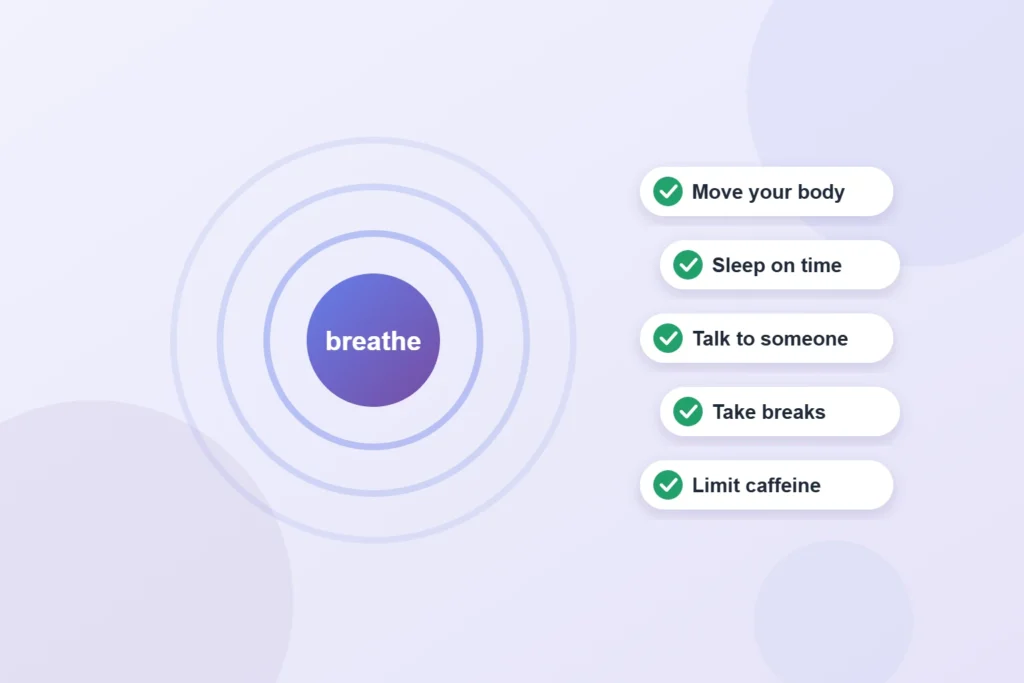
- Move your body. Regular exercise is one of the most reliable stress relievers. Even a 10-minute walk can change how you feel. See our guide on fitting exercise into a busy week.
- Protect your sleep. NIMH recommends a consistent sleep routine. Stress makes sleep harder, and poor sleep makes stress worse. Our guide on how to sleep better can help break that cycle.
- Breathe slowly. Relaxation techniques such as deep breathing calm the body’s stress response. Try the five-minute reset below.
- Write it down. Keeping a journal helps you see patterns and get worries out of your head and onto paper.
- Challenge unhelpful thoughts. When you notice a thought like “This is going to be a disaster,” ask: What’s the evidence? What would I tell a friend? What’s one thing I can control?
- Limit caffeine, and be careful with alcohol. Both can make stress symptoms and sleep worse.
- Lean on people. Talking with friends or family who help you cope in healthy ways makes stress easier to carry. If you feel you don’t have anyone, see how to beat loneliness.
NIMH notes that finding what works for you may take some trial and error. Try one or two techniques for a couple of weeks before deciding whether they help.
A five-minute reset you can use anywhere
- Minute 1: Stop and name it. Say to yourself what you’re feeling: “I’m stressed about the meeting.” Naming the feeling often lowers its intensity.
- Minutes 2 and 3: Breathe slowly. Breathe in through your nose for a count of 4, hold for 4, breathe out slowly for 4 to 6, and pause for 4. Repeat.
- Minute 4: Relax your body. Drop your shoulders, unclench your jaw, and loosen your hands.
- Minute 5: Pick one next step. Choose one small action you can take in the next hour, and write it down.
You can do this at your desk, in the car before going inside, or in a bathroom stall during a hard day.
How to handle the most common sources of stress
| Source | Practical first step |
| Money | Write down every bill and due date, then rank them by priority. Our guide on making a budget on a tight income walks you through it. |
| Work overload | List everything on your plate and ask your manager which three items matter most this week. |
| Job loss | Focus on the first deadlines (unemployment, health coverage) with our layoff checklist. |
| Caregiving | Ask for specific help (“Can you take Mom to her Thursday appointment?”) and look for respite or caregiver support programs. |
| Constant news and social media | Set two short times a day to check, and turn off non-essential notifications. |
Build a weekly routine that keeps stress lower
Quick resets help in the moment. A few weekly habits help prevent stress from piling up in the first place:
- Sunday planning (15 minutes): look at the week ahead, write down deadlines and appointments, and pick the three things that matter most.
- Daily movement: a walk, a bike ride, or a short workout most days.
- A “worry window”: set aside 10 to 15 minutes in the early evening to write down worries and possible next steps, so they don’t follow you to bed.
- One thing to look forward to: plan something small and enjoyable each week, like a call with a friend, a hobby, or a meal out.
- Screen limits: turn off work email notifications after hours if your job allows it.
Example: a week that got out of hand
Tony, 41, had a car repair bill, a big project due Friday, and a sick child at home. By Wednesday he was sleeping five hours a night, drinking four coffees a day, and snapping at his family.
He made three changes. First, he wrote down everything worrying him and split it into “this week” and “can wait.” The car bill went on a payment plan with the mechanic, and the project got a one-day extension after he asked. Second, he cut back to one coffee in the morning and went to bed at the same time for the rest of the week. Third, he took a 15-minute walk at lunch and used the five-minute reset before walking in the door at home. The problems didn’t disappear, but they stopped feeling impossible.
When to seek professional help
According to NIMH, it’s time to talk to a health care provider or mental health professional if:
- Stress feels impossible to manage.
- Your symptoms interfere with everyday life, cause you to avoid things, or seem to always be there.
- Your symptoms don’t go away, or you’re struggling to cope.
Talk therapy and, in some cases, medication are effective treatments, and many people benefit from both. Cost shouldn’t stop you from asking for help. Our guide on how to find free or low-cost mental health care covers options with and without insurance.
If you’re in immediate distress or thinking about hurting yourself, call or text 988 or chat at 988lifeline.org. It’s free, confidential, and available 24/7.
Sources
- National Institute of Mental Health, I’m So Stressed Out! Fact Sheet
- 988 Suicide & Crisis Lifeline
About this guide: Telyf is an independent publication. This article is general information, not medical advice. Talk to a doctor or other qualified health professional before changing your routine, starting a new exercise program or making decisions about medications. In an emergency, call 911.
About the Author

Vinícius Andrade writes about the practical side of personal growth — employee benefits, career moves, personal finance, and everyday wellbeing. He turns dense rules and jargon into steps anyone can act on, so readers spend less time decoding fine print and more time making decisions that actually improve their lives.
