

Buy now, pay later (BNPL) is everywhere at checkout: split a $200 purchase into four payments of $50, often with no interest. Used carefully, it can spread out a necessary purchase without the 20%-plus interest of a credit card. Used carelessly, it’s an easy way to end up with half a dozen payments coming out of your account at the same time.
This guide explains how BNPL loans work, whether they affect your credit, the risks most people don’t see coming, and a seven-step checklist for using them without hurting your budget or your score.
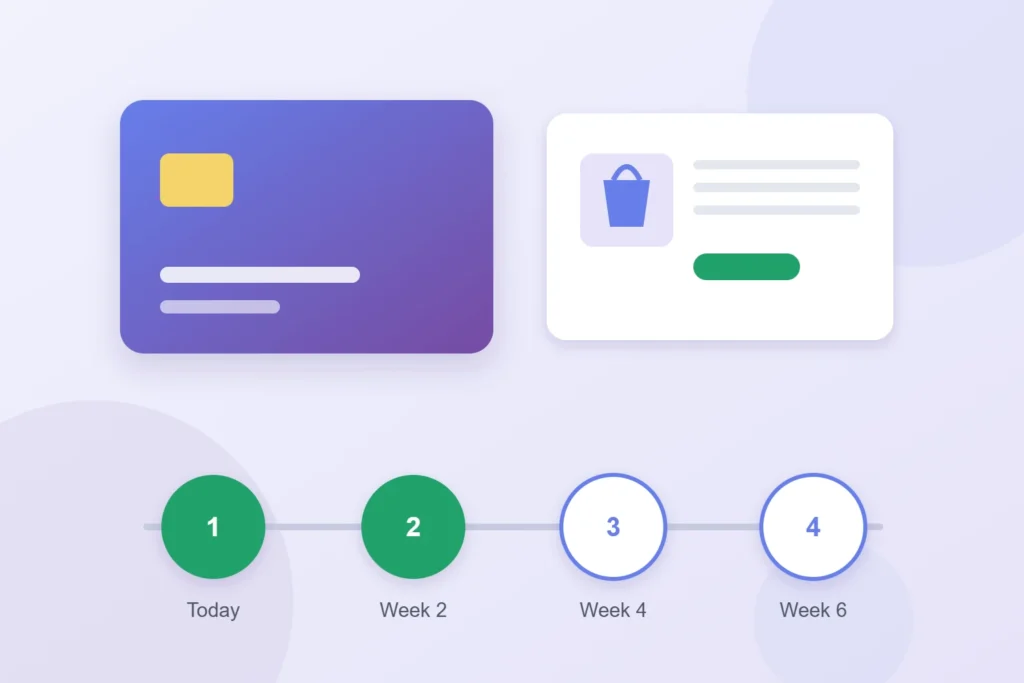
How buy now, pay later works
There are two main types, and they work very differently:
| Pay in 4 | Monthly BNPL loan | Credit card | |
| Typical use | Smaller purchases | Larger purchases (furniture, electronics, travel) | Any purchase |
| Payments | 4 payments, every 2 weeks | Monthly, often over 3 to 36 months | Monthly, with a minimum due |
| Interest | Usually none | Can be 0% or a high APR, depending on the offer and your credit | Charged on balances you don’t pay in full |
| Main cost if you slip | Late fees; overdraft fees from your bank | Interest and late fees | Interest and late fees |
| Credit check | Often a soft check or none | Often a credit check | Hard inquiry when you apply |
The first payment is usually charged at checkout, and the rest are set up as automatic payments from your debit card, bank account, or credit card.
Does BNPL affect your credit score?
It depends on the provider and the type of loan, and it’s changing:
- Some providers report. Affirm began reporting its loans, including pay-in-4 plans, to Experian and TransUnion. Many monthly BNPL loans from other lenders are reported like any other installment loan.
- Some don’t, for now. As of August 2025, Klarna and Afterpay were not sending pay-in-4 data to the bureaus, according to Axios.
- Scores are just starting to catch up. FICO announced in June 2025 that it would launch scores that include BNPL data, and said on-time payments may help some consumers. Lenders adopt new score versions slowly, so most decisions today still use older scores that don’t count pay-in-4 loans.
- Missed payments can hurt either way. A BNPL debt that goes unpaid can be sent to collections, and collections can show up on your credit report.
The safe assumption: on-time BNPL payments may help a little or not at all, while missed payments can hurt. Plan as if every BNPL loan will appear on your report. For the full picture of what moves a score, see our guide on how to improve your credit score.
The risks most people don’t see coming
- Stacking. Each plan looks small, but several running at once can add up to a big chunk of a paycheck. Because many plans don’t show on credit reports yet, no lender stops you from taking on too many.
- Overdraft fees. If an automatic payment hits your debit card when your balance is low, your bank may charge an overdraft fee on top of any BNPL late fee.
- Returns are slower to sort out. If you return an item, you may need to keep making payments until the store processes the refund.
- Fewer protections than credit cards. A federal interpretive rule that would have given BNPL users credit-card-style dispute rights was withdrawn in 2025. Read the provider’s own dispute and refund policy before you buy.
- Spending more than planned. Splitting a price into four makes it feel smaller. The total is still the total.
Example: how three “small” plans add up
Over three weeks, Nicole uses pay-in-4 for headphones ($240), a couch ($480), and new tires ($360). Each plan seemed manageable on its own: $60, $120, and $90 every two weeks.
Together, she owes $270 every two weeks for six weeks, on top of rent and other bills. Her take-home pay is $1,350 per paycheck. When a $90 tire payment comes out two days before payday, her checking account goes negative, and she pays a $35 overdraft fee plus a late fee from the BNPL provider. Three “interest-free” purchases ended up costing her about $50 in fees and a stressful month.
A simple rule would have prevented this: total all BNPL payments due in the next six weeks before adding a new one, and keep that total under a set limit, such as 10% of take-home pay.
7 steps to use BNPL without hurting your credit
- Use it only for planned, necessary purchases you could afford to pay for in full today. If you couldn’t, BNPL is borrowing you can’t afford.
- Read the terms before you click. Check the APR (if any), late fees, the payment schedule, and whether the provider reports to credit bureaus.
- Limit yourself to one or two plans at a time. Write them down with their due dates.
- Line up payment dates with paydays. Many apps let you change the date of a payment.
- Pay from a source that won’t overdraft. If you link a debit card, keep a small buffer in checking. If you link a credit card, pay that card in full, or you’ll end up paying interest after all.
- Turn on payment reminders in the app, and check your bank balance a few days before each payment.
- If you can’t pay, contact the provider before the due date. Ask about moving the date or a payment plan. Don’t ignore it and let it go to collections.
When BNPL can make sense
- A necessary purchase, such as a work laptop or a replacement appliance, at a true 0% rate, when you have the cash in savings but want to keep your cushion intact while you pay it off.
- A one-time purchase that fits easily into your budget, with payments scheduled right after payday.
And when it doesn’t: everyday spending like groceries or gas, purchases you’re buying mainly because of the split payment, or any time you’re already behind on other bills. If BNPL has become a way to stretch your paycheck, it’s a sign to revisit your budget. Our guide on making a budget on a tight income can help, and our guide to building an emergency fund shows how to cover surprises without borrowing.
Already juggling too many plans?
- List every plan, the amount, and the next due date.
- Stop opening new plans until the list is down to one or two.
- Pay any plans that charge interest first, then the ones with the earliest due dates.
- If BNPL payments are pushing other bills onto credit cards, see our guide on how to pay off credit card debt.
Sources
- Axios, Buy-now-pay-later companies get cold feet about handing data to credit bureaus (August 2025)
- PYMNTS, FICO to Launch Credit Scores That Incorporate BNPL Data (June 2025)
- PYMNTS, Affirm to Report All Pay-Over-Time Loans to TransUnion
About this guide: Telyf is an independent publication. We are not affiliated with any government agency, and this article is general information, not legal or financial advice. Rules can vary by state and change over time, so confirm the details with the official agency before making decisions.
About the Author

Vinícius Andrade writes about the practical side of personal growth — employee benefits, career moves, personal finance, and everyday wellbeing. He turns dense rules and jargon into steps anyone can act on, so readers spend less time decoding fine print and more time making decisions that actually improve their lives.
