In 2026, wellness is no longer a destination; it is an immersive layer of reality. With the FDA clearing the first wave of VR-based digital therapeutics (DTx), spatial computing has turned the home into a clinical-grade environment for mental health and physical rehabilitation.
As we enter 2026, the grainy, isolating VR experiences of the early 2020s have been replaced by “Retina-Resolution” spatial computing. This technology has moved beyond gaming to become a primary tool for Interoceptive Awareness—the ability to sense and regulate internal bodily states. In 2026, your living room can transform into a serene Himalayan temple for meditation or a specialized clinic for vestibular rehabilitation, all while your biometric sensors feed real-time data back to your primary care AI to adjust the intensity of the session.

Digital Therapeutics (DTx): The FDA-Cleared Sanctuary
The biggest technical shift in 2026 is the mainstreaming of Prescription VR. Doctors are now issuing “Digital Scripts” for spatial experiences that treat chronic pain, anxiety, and PTSD with the same clinical rigor as pharmaceuticals.
- Spatial Exposure Therapy: For phobias and social anxiety, 2026 systems use “High-Fidelity Exposure” to gradually desensitize patients in a controlled, safe environment, with AI monitoring cortisol-driven micro-sweat and heart rate to ensure the patient stays within the “growth zone” without re-traumatization.
- Pain Gating: To combat the opioid crisis, 2026 spatial wellness utilizes the “Gate Control Theory of Pain.” By flooding the brain with immersive, high-bandwidth visual and auditory stimuli, these systems effectively “block” chronic pain signals from reaching the conscious mind.
- Neuro-Plasticity Training: Spatial computing games in 2026 are specifically designed to stimulate white matter growth in aging brains, acting as a “digital gym” to stave off cognitive decline.
Digital Twins and the Future of Physiotherapy
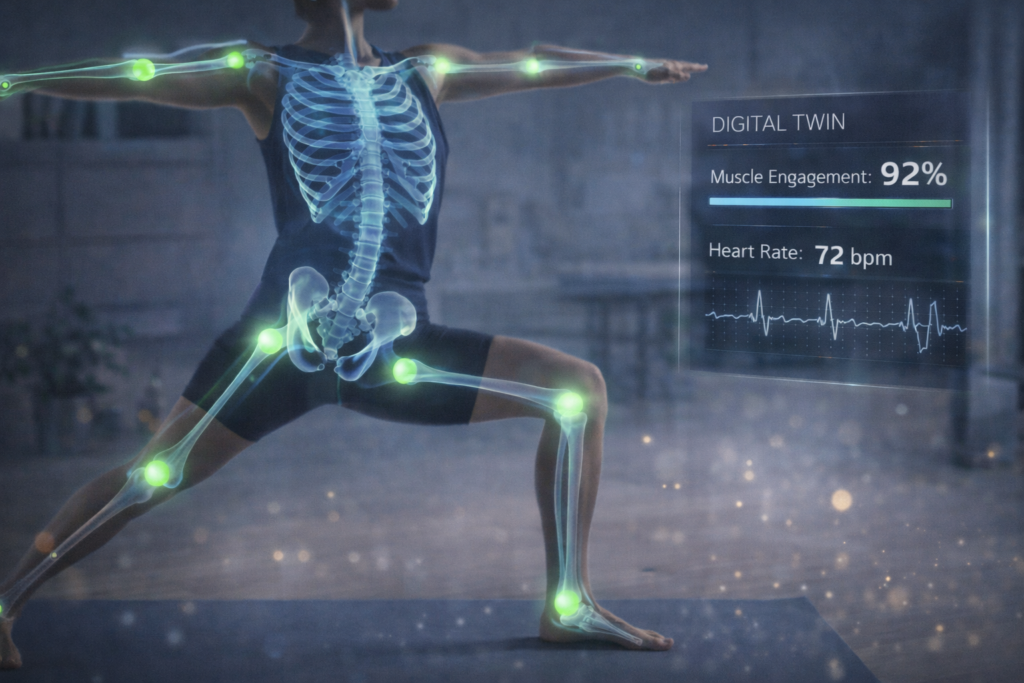
In 2026, physical therapy has been “gamified” through the use of Bio-Sensing Digital Twins. When you perform a stretch or an exercise, your spatial headset (like the Apple Vision Pro 2 or Meta Quest Pro 2) maps your skeletal structure in 3D.
“In 2026, you don’t just ‘do’ exercises; you interact with a holographic Digital Twin of yourself. This ghost-like overlay shows you exactly where your form is off, highlighting the muscle groups you’re failing to engage in glowing red or green.”
This real-time Proprioceptive Feedback ensures that home-based rehab is as effective as in-person sessions. In 2026, insurance companies have begun offering lower premiums to patients who complete their “Digital Twin Rehab” modules, as the data provides irrefutable proof of compliance and progress.
Insurance Reimbursement: The ICD-11 Integration
The real catalyst for the 2026 immersive wellness boom is the financial infrastructure. As of January 2026, the ICD-11 (International Classification of Diseases) has fully integrated codes for digital therapeutics.
This means that if you are diagnosed with a qualifying condition, your 2026 health insurance (Aetna, UnitedHealth, etc.) may fully cover the cost of your high-end spatial headset and the monthly subscription to the therapeutic software. We have officially entered the era where “Hardware as a Medical Device” is a standard part of the American healthcare benefit package.
Comparison: Traditional Wellness vs. 2026 Spatial Wellness
| Feature | Traditional Wellness | 2026 Spatial Wellness |
| Primary Tool | Smartphone Apps / Gyms | Spatial Computers / VR / AR |
| Data Loop | Manual / Estimations | Biometric / Skeletal 3D Mapping |
| Regulation | Largely Unregulated | FDA-Cleared & Prescribable |
| Mental Goal | Relaxation / Distraction | Interoceptive Awareness / Healing |
| Payment | Out-of-pocket | Insurance Reimbursable (ICD-11) |
FAQ – Frequently Asked Questions About Immersive Wellness 2026
Will using VR for therapy cause “Motion Sickness” in 2026?
Technically, no. The 2026 generation of spatial computers has reached “Zero-Latency” (<12ms) and utilizes high-refresh rates (144Hz+) that eliminate the sensory mismatch that caused nausea in older headsets.
Is my mental state data private in 2026?
Under the 2026 Neural Privacy Act, any biometric data used for “Medical Immersive Therapy” must be encrypted and stored on-device. Companies cannot use your “Emotional Response Data” for advertising without violating federal law.
Can I replace my physical therapist with a 2026 headset?
Not entirely. While the headset handles daily “form correction” and data collection, most 2026 protocols still involve a monthly “Human Sync” where a physical therapist reviews your Digital Twin’s progress data to adjust the treatment plan.