

By 2026, the concept of a “healthy diet” has been technically debunked as a universal constant. The wellness industry has undergone a radical phase shift, moving away from generic nutritional guidelines toward Microbiome-as-a-Service (MaaS). This model treats the human gut not as a simple digestive tube, but as a dynamic bioreactor that requires constant, data-driven calibration. In 2026, the era of buying a random probiotic off the shelf is over; it has been replaced by subscription-based, AI-orchestrated microbial management.
The rise of MaaS is a direct response to the “Nutritional Noise” of the early 2020s. We now understand that a food’s health value is technically dependent on the specific bacterial strains present in the consumer’s gut at the moment of ingestion. In 2026, high-performance individuals treat their microbiome as a biological asset that requires regular auditing. MaaS platforms provide the infrastructure for this, offering continuous monitoring and the delivery of precision “postbiotics”—metabolites that your specific gut might be failing to produce.
This transition represents the ultimate “Personalization Pivot.” Rather than following a Mediterranean or Keto diet because it worked for a celebrity, 2026 professionals use MaaS to identify their specific Metabolic Fingerprint. This is not just about weight loss; it is about optimizing the internal environment to reduce systemic inflammation and maximize nutrient bioavailability. In 2026, your gut is no longer a mystery; it is a service-level agreement (SLA) between you and your biology.
In 2026, eating without microbiome data is like navigating a complex city without GPS; you might eventually get where you’re going, but the technical inefficiency and metabolic cost are staggering.
Real-Time Gut-to-App Integration
The technical backbone of MaaS in 2026 is the integration of Smart Sensors and automated sampling. The “One-Off” stool test of the past has been replaced by passive, continuous monitoring via smart toilets or “Digital Pill” sensors that relay real-time bacterial fluctuations to a smartphone app. This allows for the tracking of the Shannon Diversity Index (H’), a mathematical measure used to quantify the health of your internal ecosystem:
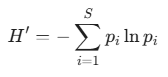
Where pi is the proportion of the i-th species in your gut. In 2026, MaaS platforms use this index as a primary KPI. If your H’ value drops below a certain threshold, the AI immediately adjusts your “Nutritional Feed,” suggesting specific fermented fibers or customized strains to restore diversity before sub-clinical symptoms even appear. This is Predictive Gastronomy, where the app knows you need a specific polyphenol before you even feel a hint of bloating.
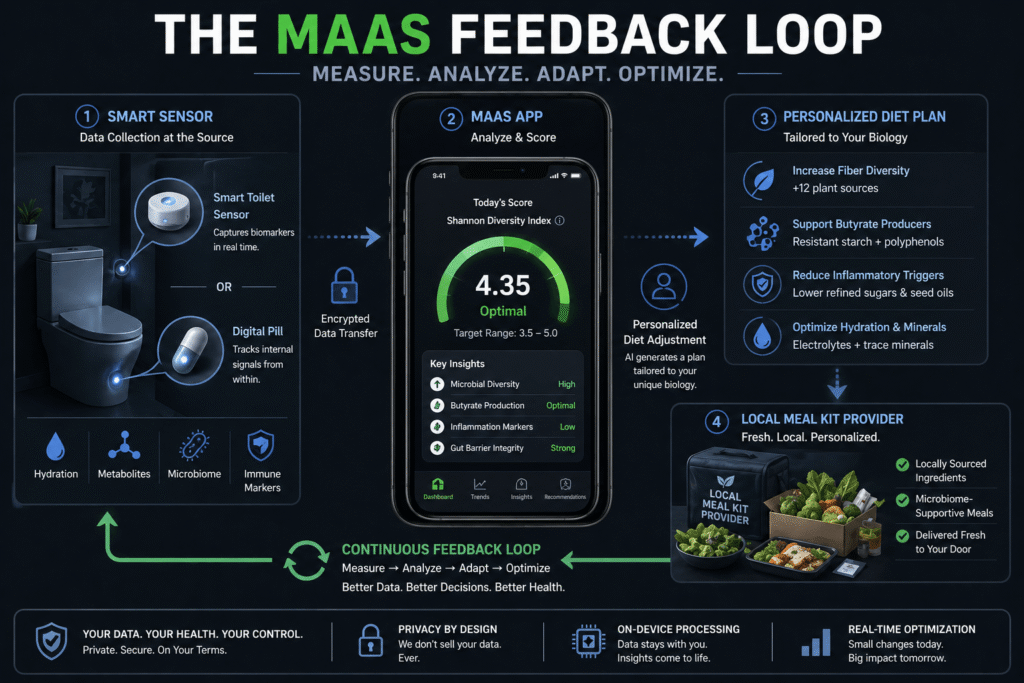
This real-time feedback loop has technically eliminated the “Trial and Error” phase of dieting. By 2026, MaaS providers have mapped millions of food-microbe interactions, allowing them to predict with 99% accuracy how your blood glucose and inflammatory markers will respond to a specific meal. This level of Metabolic Mastery ensures that every calorie consumed is technically optimized for your current bacterial state, turning every meal into a precise medical intervention.
Personalized Bio-Curation: The End of the “Healthy” Food Myth
The most direct correction MaaS has offered in 2026 is the destruction of the “Superfood” narrative. We now have the technical proof that “healthy” foods like spinach or kale can be inflammatory for certain individuals if their microbiome lacks the specific enzymes to process oxalates or sulfur compounds. MaaS platforms provide Bio-Curation, essentially filtering your grocery list to remove “False Superfoods” that are technically detrimental to your specific gut architecture.
This has led to the rise of Customized Meal Kits that are direct extensions of the MaaS subscription. In 2026, your MaaS provider communicates directly with a local robotic kitchen to assemble meals that are mathematically balanced for your gut’s current needs. This is the end of the “Universal Diet.” In this new paradigm, nutrition is no longer a set of rules; it is a personalized flow of data-driven bio-materials designed to keep your internal bioreactor at peak efficiency.
The Gut-Brain Infrastructure: Mental Performance as a Metabolic Outcome
In 2026, the Gut-Brain Axis is no longer a theoretical concept but a technical target for mental performance optimization. MaaS platforms are now used by “Knowledge Athletes” to tune their gut for neurotransmitter production. Since approximately 95% of the body’s serotonin is produced in the gut, MaaS allows for the Microbial Engineering of Mood. By fostering specific strains of Bifidobacterium and Lactobacillus, users can technically regulate their baseline levels of anxiety and focus.
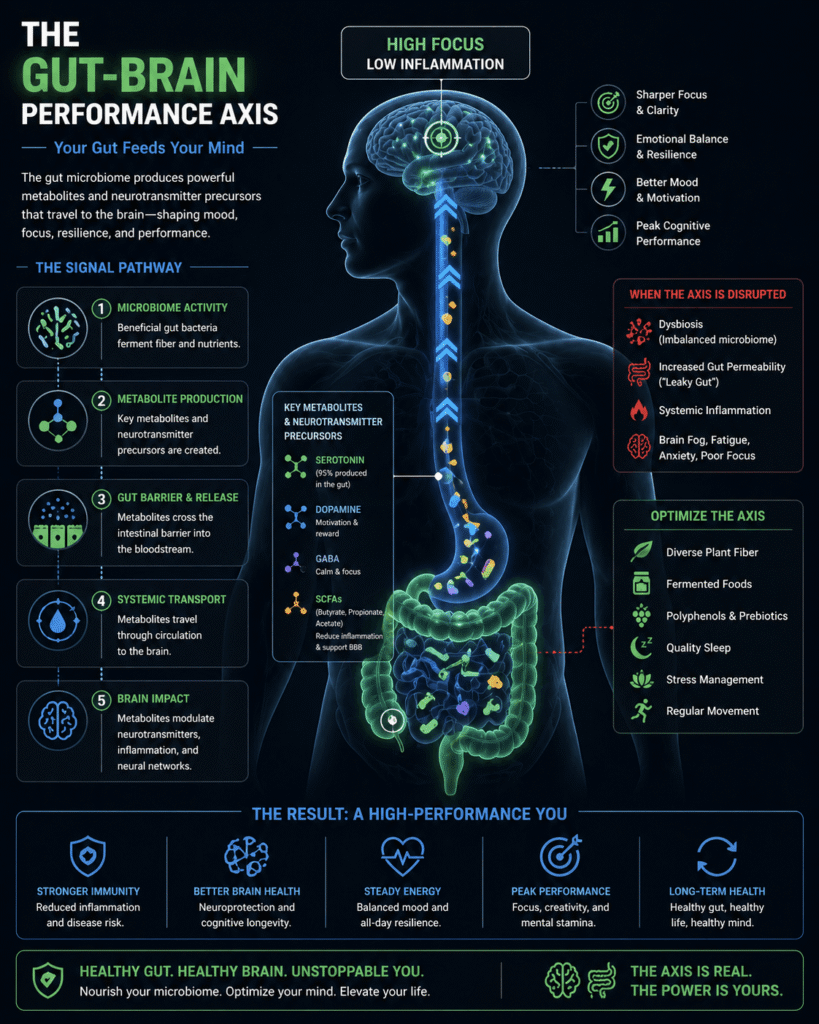
This has transformed the 2026 workspace. Many high-tier consulting firms and tech companies now provide “Gut Health Stipends” as part of their performance benefits. The logic is purely technical: a balanced microbiome leads to lower neuro-inflammation, which translates to better decision-making and sustained cognitive focus. In 2026, a “High-Performance Gut” is viewed as the prerequisite for a “High-Performance Mind,” and MaaS is the tool used to bridge that gap.
The Economics of MaaS: Corporate Wellness and Precision Benefits
The institutionalization of MaaS has drastically changed the 2026 insurance landscape. Major health insurers now offer “Microbiome Discounts” for policyholders who maintain a high Shannon Diversity Index. This is not about being “fit” in the traditional sense, but about demonstrating a technically resilient internal ecosystem that is less likely to develop chronic inflammatory diseases. MaaS has turned gut health into a verifiable, auditable metric with direct financial value.
| Feature | Legacy Nutrition (2020s) | MaaS Standards (2026) |
| Data Source | General Guidelines (USDA) | Personal Real-Time Sequencing |
| Pace | Static / Seasonal | Dynamic / Daily Adjustments |
| Supplementation | Generic Probiotics | Targeted Postbiotics & Strains |
| Goal | General Weight Management | Systemic Resilience & Focus |
| Measurement | Body Weight / BMI | Shannon Diversity (H’) / Metabolites |
FAQ: Mastering the 2026 MaaS Landscape
How much does a MaaS subscription cost in 2026?
As the technology has scaled, base-level MaaS subscriptions have dropped to between $50 and $150 per month. This typically includes the continuous monitoring sensors and a monthly delivery of personalized prebiotic/postbiotic boosters. High-tier “Elite” plans that include robotic meal delivery can range from $800 to $1,500 per month.
Can MaaS help with “Leaky Gut” or is that still a myth in 2026?
The term “Leaky Gut” has been technically replaced by Intestinal Permeability Dysfunction. In 2026, MaaS platforms can measure specific markers like Zonulin and Lipopolysaccharides (LPS) in the blood. If these markers are high, the MaaS AI identifies the technical “breach” in the gut barrier and suggests specific strains of Akkermansia muciniphila to repair the mucosal lining.
How often do I need to sample my microbiome?
In the 2026 MaaS model, sampling is passive and continuous. Smart toilets or digital sensors integrated into your home plumbing provide daily updates. This allows the system to catch “Microbial Drifts” caused by a single weekend of poor sleep or a course of antibiotics, allowing for immediate corrective measures rather than waiting for symptoms to manifest months later.
Is my gut data private in 2026?
MaaS providers are now governed by “Bio-Privacy” laws. Your microbial signature is technically classified as protected genetic data. In 2026, reputable providers use Zero-Knowledge Proofs to verify your health metrics to insurance companies without revealing your raw bacterial composition, ensuring your “Internal Identity” remains secure.
Do MaaS plans work for pets in 2026?
Yes, “Pet MaaS” is a massive growth sector in 2026. High-end pet owners use the same MaaS technology for their dogs and cats to extend their “Healthspan.” By optimizing the feline or canine microbiome, 2026 pet owners are technically reducing veterinary costs and improving the longevity of their animals through precision pet food.
What are “Postbiotics” and why are they better than Probiotics in 2026?
Probiotics are live bacteria; Postbiotics are the beneficial byproducts (like Butyrate) those bacteria produce. In 2026, if your gut is too inflamed for new bacteria to survive, MaaS platforms deliver postbiotics directly. This technically “jumpstarts” the system, providing the benefits of a healthy microbiome even before the actual bacterial colonies have been fully restored.
About the Author

Vinícius Andrade writes about the practical side of personal growth — employee benefits, career moves, personal finance, and everyday wellbeing. He turns dense rules and jargon into steps anyone can act on, so readers spend less time decoding fine print and more time making decisions that actually improve their lives.
