

The landscape of professional advancement in 2026 is no longer governed solely by the static resume or the curated LinkedIn profile. Instead, the primary driver of career mobility has shifted to the algorithmic reputation—a dynamic, data-driven “shadow” that follows a professional across different organizations and platforms. This digital proxy is synthesized from thousands of data points, including code commit frequencies, project management velocity, and even the sentiment of peer feedback analyzed by natural language processing (NLP). Understanding how to architect and manage this data shadow is now a foundational skill for anyone navigating the high-stakes Talent Marketplaces of the mid-2020s.
Unlike traditional reputations, which are built on subjective networking and anecdotal evidence, the algorithmic reputation is quantifiable and persistent. In 2026, when a professional applies for a “Fractional Executive” role or a high-level technical position, the hiring AI does not just read their self-reported accomplishments; it queries specialized reputation oracles that provide a verified score of their past performance. This shift towards “objective” validation means that a professional’s value is increasingly tied to the quality of the data they generate in their daily workflows. Consequently, data sovereignty—the right to own, audit, and port this performance history—has emerged as the most critical labor rights issue of our time.
The strategic imperative for the modern worker is to transition from being a passive subject of data collection to an active architect of their professional narrative. This involves a deep technical understanding of how performance metrics are aggregated and weighted by modern ERP (Enterprise Resource Planning) systems. Because these algorithms are designed to reward consistency and specific “high-value” behaviors, professionals must learn to align their work habits with the underlying logic of the systems that measure them. Failure to do so can lead to “data invisibility,” where a talented individual is overlooked by automated sourcing tools because their digital footprint does not match the expected patterns of elite performance.
Deciphering the “Reputation Score” in Internal Talent Marketplaces
The “Reputation Score” is the technical heart of the 2026 Internal Talent Marketplace (ITM). These platforms use machine learning to match employees with new projects, promotions, and cross-functional opportunities based on their “latent skills” and “reliability index.” The score is not a single number but a multi-dimensional matrix that evaluates factors such as collaborative friction, “time-to-competency” on new tasks, and the ability to mentor others as evidenced by the subsequent performance peaks of their direct reports. For the employee, this score determines their visibility to leadership and their access to the most prestigious, high-growth assignments within the firm.
Managing this score requires a proactive approach to digital signaling. In 2026, every interaction on a collaborative platform—be it a pull request, a strategic comment in a shared document, or the orchestration of a virtual stand-up—contributes to the score’s evolution. High-performing professionals use this to their advantage by ensuring their most impactful work is “captured” in a format the algorithm can easily parse and reward. This is not about “gaming the system” but about ensuring that technical excellence is accurately reflected in the data stream that informs the company’s automated decision-making processes.
The most significant risk in 2026 career management is “data siloing,” where your best professional achievements remain trapped in a proprietary system that you cannot access or prove to a future employer.
To mitigate this risk, sophisticated workers are demanding transparency in how their Reputation Score is calculated. In 2026, several jurisdictions have mandated that employees be given access to a “Performance Data Summary” that explains the weighting of their scores. This transparency allows for a more honest dialogue between the worker and the algorithmic manager, enabling the professional to identify and correct areas where their digital shadow may be misrepresenting their actual contributions or growth trajectory.
The Technical Mechanics of Data Portability and Career Sovereignty
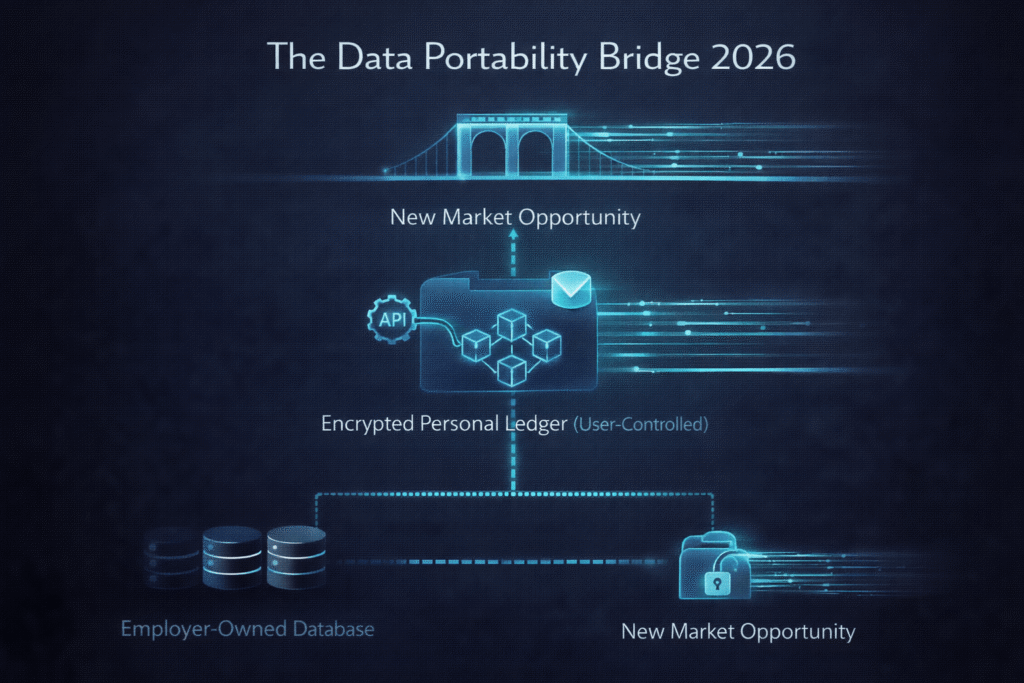
As professionals move between employers more frequently in 2026, the concept of Data Portability has become the linchpin of career sovereignty. The ability to “carry” your verified performance metrics from a previous job to a new one prevents the “seniority reset” that used to occur when changing companies. Technical standards like the Universal Professional Ledger (UPL) now allow for the secure, encrypted transfer of performance “badges” and verified skill-set milestones. The following table highlights the critical differences between the Traditional Resume and the 2026 Algorithmic Profile:
| Data Dimension | Traditional Resume (Obsolete) | Algorithmic Profile (2026) | Technical Verification |
| Skill Evidence | Self-Reported Bullet Points | Verified Telemetry Data | API-Linked Work Logs |
| Soft Skills | Vague Adjectives (e.g., “Leader”) | NLP Sentiment Analysis | Peer Interaction History |
| Growth Rate | Job Title History | Velocity of Skill Acquisition | Adaptive Learning Scores |
| Authority | Subjective References | On-Chain Credentialing | Blockchain/SSI Proofs |
The transition to Self-Sovereign Identity (SSI) for professionals means that you, rather than your employer, control the “private keys” to your performance data. In an audit or a job interview, you can provide “zero-knowledge proofs” that you meet certain performance thresholds without revealing the sensitive proprietary data of your previous employer. This technical balance between privacy and proof is the gold standard for high-level career transitions in 2026, allowing elite talent to prove their worth without breaching non-disclosure agreements.
However, the “portability” of data also introduces the risk of negative data persistence. A poor performance period early in one’s career could, theoretically, haunt a professional indefinitely if not managed correctly. This has led to the rise of “Data Rehabilitation” services, where career strategists help professionals identify “data outliers” and build a technical case for why those metrics should be weighted less heavily in light of more recent, high-performance trends. In 2026, your career is a long-term data asset that requires active rebalancing and optimization.
Mitigating “Algorithm Drift” in Professional Performance Metrics
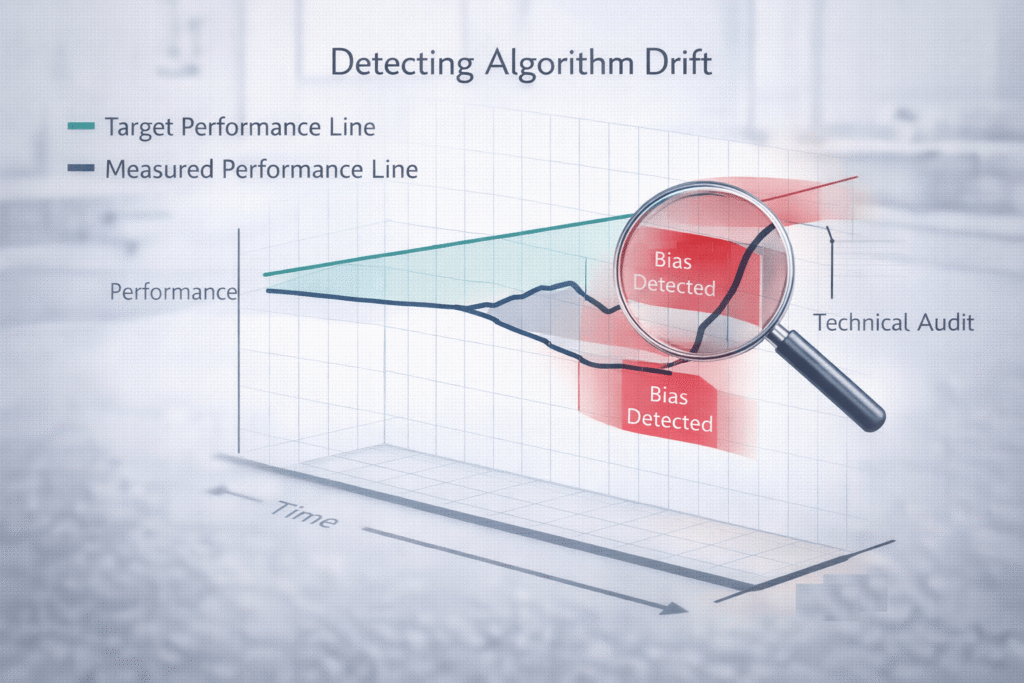
A major technical challenge in 2026 is Algorithm Drift, where the models used to evaluate employees become less accurate over time or develop unintended biases against certain work styles. For example, an algorithm optimized for “speed of delivery” might unfairly penalize a strategic thinker who spends more time in the “architecting” phase but produces fewer bugs and requires less long-term maintenance. Professionals must be vigilant in identifying when their digital shadow is being distorted by a misaligned or outdated algorithmic lens.
To counter this, many career experts recommend “manual overrides” or “human-in-the-loop” audits for high-stakes decisions. If a professional notices that their Internal Reputation Score is declining despite high-quality output, they must be prepared to present forensic evidence—such as project post-mortems or client testimonials—to challenge the algorithmic finding. In 2026, the ability to “debug” your own performance data is just as important as the technical skills required to do the job itself.
Furthermore, the rise of Generative AI in performance reviews adds another layer of complexity. AI systems are now used to summarize an entire year of Slack messages and Jira tickets into a single narrative review. While efficient, these summaries can suffer from “hallucinations” or lack the nuance to understand the context of a crisis or a pivot. Professionals in 2026 are increasingly taking a “pro-active summary” approach, providing the AI with their own structured data summaries at the end of each quarter to ensure the “base model” of their reputation is grounded in their own verified facts.
Strategies for Auditing and Correcting Your AI-Generated Career Narrative
The final step in architecting your professional data shadow is the regular Reputation Audit. Just as one would check a credit report for errors, the 2026 professional must audit the data aggregators that influence their market value. This involves querying the major Talent Intelligence Platforms to see how your profile is being “indexed” and categorized. If you find that the AI is labeling you as a “Junior Developer” when your recent projects involve “Lead Orchestration,” you must take technical steps to correct the metadata associated with your digital footprint.
Correcting an AI-generated narrative requires a multi-pronged approach. You must look for “low-fidelity signals”—such as outdated certifications or inconsistent job descriptions—and update them with high-fidelity, verified data. In 2026, the “SEO for Careers” is not about keywords on a page, but about the structured data schemas (like JSON-LD for resumes) that allow AI scrapers to accurately ingest your career milestones. By providing a clean, “machine-readable” version of your professional history, you ensure that the algorithmic shadow you cast is both accurate and advantageous.
Leading career architects suggest a monthly Data Integrity Checklist to maintain a high-value algorithmic reputation:
- Source Reconciliation: Ensure that your data on LinkedIn, internal company portals, and specialized GitHub/Portfolio sites are synchronized.
- Skill Weighting Audit: Check if the algorithms are prioritizing your “legacy skills” over your “emerging competencies” and adjust your signaling accordingly.
- Sentiment Check: Review peer feedback for recurring “negative keywords” that might trigger behavioral red flags in an automated review.
- API Connection Verification: Ensure that your private “Professional Ledger” is correctly pulling data from all relevant work platforms.
- Drafting the “Rebuttal Memo”: Maintain a ready-to-go document that provides the human context for any “data anomalies” (e.g., a dip in productivity during a major life event).
FAQ: Professional Sovereignty and Data Rights
How does the “Right to Explanation” under 2026 labor laws apply to an AI-driven promotion denial?
In many jurisdictions, including the EU and several US states, employees now have a statutory Right to Explanation for automated decisions that significantly impact their career. If you are denied a promotion by an algorithm, the company is legally required to provide a “meaningful summary” of the data used and the logic applied. From a technical standpoint, this means the employer must be able to produce the feature weights and the specific data inputs (e.g., specific project delays or peer ratings) that led to the denial, allowing the employee to contest any factual inaccuracies.
Can I “delete” my professional data shadow if I want to start a completely new career path in 2026?
The “Right to be Forgotten” exists for personal data, but in a professional context, it is more complex. While you can delete your account on a Talent Marketplace, the “aggregated insights” derived from your work might still exist in decentralized databases. The more effective 2026 strategy is not “deletion” but “re-indexing.” By flooding the system with new, high-quality data in your new field—and using “weighted portability” to de-emphasize your old career data—you can effectively “pivot” your algorithmic reputation without losing the “reliability score” you built over years of work.
What is the impact of “Synthetic Performance Data” on the job market in 2026?
“Synthetic Data” refers to performance metrics generated by AI agents to “fill in the gaps” where real data is missing. While useful for new graduates with no work history, it is a high-risk area for experienced professionals. If an employer uses synthetic data to “estimate” your performance in a role you haven’t held, it can lead to Algorithmic Bias. In 2026, the technical defense against this is to always provide “Real-World Verifiable Evidence” (via UPL) that supersedes any synthetic estimations.
Is it legal for a prospective employer to “scrape” my private Slack or Teams messages to build a behavioral profile during hiring?
As of 2026, this is a major legal “red flag.” Most federal regulations prohibit the use of “unauthorized behavioral scraping” for hiring purposes. However, “Public Persona Analysis”—which looks at your public contributions on forums, social media, and open-source projects—is standard practice. The technical boundary is the Consent Layer. Employers can only analyze data that is either public or that you have explicitly “shared” via a secure API connection. Any “shadow profiling” done without consent is grounds for significant legal action under modern Employee Data Protection statutes.
About the Author

Vinícius Andrade writes about the practical side of personal growth — employee benefits, career moves, personal finance, and everyday wellbeing. He turns dense rules and jargon into steps anyone can act on, so readers spend less time decoding fine print and more time making decisions that actually improve their lives.
