In 2026, the obsession with “thinness” has been replaced by a focus on “Skeletal Muscle Index.” We now recognize that muscle is not just for aesthetics; it is a sophisticated endocrine organ that secretes myokines—molecules that regulate brain health, metabolic rate, and immune function.
As we enter January 2026, the medical community has declared Sarcopenia (age-related muscle loss) the silent epidemic of the decade. For the high-performance professional, “staying active” is no longer enough. The 2026 wellness standard requires a technical approach to muscle preservation and VO2 Max optimization. This shift is driven by the irrefutable data that your grip strength and your cardiovascular “horsepower” are the two strongest predictors of how long—and how well—you will live.

The Myokine Revolution: Muscle as a Pharmacy
The most significant shift in 2026 wellness is the understanding of Myokines. Every time you contract a muscle against resistance, you are essentially “injecting” yourself with a cocktail of beneficial chemicals.
- BDNF Production: During resistance training, muscles release Irisin, which crosses the blood-brain barrier to stimulate the production of Brain-Derived Neurotrophic Factor (BDNF), the “fertilizer” for new neurons.
- Metabolic Buffer: In 2026, muscle is viewed as the body’s primary “glucose sink.” A higher skeletal muscle mass allows for greater metabolic flexibility, protecting against the insulin resistance that often accompanies the sedentary demands of modern careers.
- Anabolic Resistance: In 2026, we’ve identified that as we age, we become “anabolic resistant,” requiring higher-quality protein and more intense mechanical tension to trigger Muscle Protein Synthesis (MPS) compared to our younger selves.
VO2 Max: The 2026 “Horsepower” Standard
While muscle is the armor, VO2 Max (the maximum amount of oxygen your body can utilize during intense exercise) is the engine. In 2026, your “biological age” is heavily weighted by this metric.
Technically, the 2026 longevity protocol focuses on Zone 2 Training (steady-state aerobic) to build mitochondrial density, paired with once-a-week VO2 Max Intervals to increase peak aerobic capacity. Research in early 2026 confirms that moving from the “low” to “below average” category of VO2 Max for your age group reduces your risk of all-cause mortality by 50%—a statistical impact far greater than that of any pharmaceutical intervention available today.
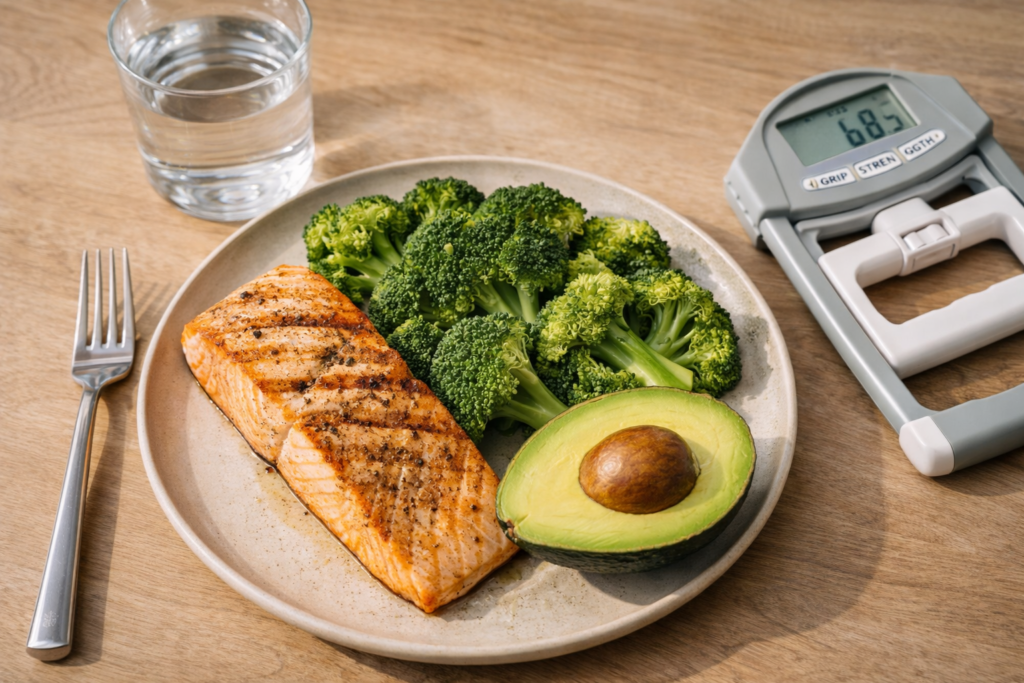
The 2026 Protein Threshold and Leucine Trigger
Nutritionally, 2026 has moved away from generic “daily allowances.” The focus is now on the Leucine Threshold. To trigger MPS in a 2026 professional over the age of 40, each meal must contain approximately 2.5 to 3 grams of Leucine (an essential amino acid).
This typically translates to 30–50 grams of high-quality protein per meal. In 2026, “grazing” on small amounts of protein throughout the day is discouraged, as it fails to reach the “anabolic trigger” needed to maintain muscle mass under the stress of a modern 2026 lifestyle. The “30-in-30” rule—30 grams of protein within 30 minutes of waking—has become a standard 2026 protocol for maintaining metabolic health and cognitive focus.
Comparison: 2024 “Aesthetic” Fitness vs. 2026 Functional Longevity
| Feature | 2024 Fitness Model | 2026 Longevity Model |
| Primary Metric | Body Weight / Body Fat % | Skeletal Muscle Index / VO2 Max |
| Cardio Focus | Weight loss / Calorie burn | Mitochondrial Density (Zone 2) |
| Protein View | Supplement for “Bodybuilders” | Essential Anabolic Trigger for All |
| Strength Goal | Muscle Size (Hypertrophy) | Functional Strength / Grip Power |
| Health Focus | Looking good | Neurological & Metabolic Resilience |
FAQ – Frequently Asked Questions About Functional Longevity in 2026
Is walking enough for longevity in 2026?
Walking is the baseline, but it is not sufficient. While 8,000–10,000 steps are vital for metabolic health, 2026 science dictates that you must include resistance training to prevent sarcopenia and high-intensity work to maintain VO2 Max.
Why is “Grip Strength” so important in 2026 medical checkups?
Grip strength is a validated proxy for overall systemic strength and “vitality.” In 2026, it is used as a screening tool because it correlates highly with your risk of cardiovascular disease and your ability to survive a major health event.
How much protein is too much in 2026?
For an active individual in 2026, the “danger zone” for protein is much higher than previously thought. Most 2026 experts recommend 1.6 to 2.2 grams of protein per kilogram of body weight, provided your kidney function is healthy.