

In 2026, the definition of an optimized workspace has migrated from physical lumbar support to the complex domain of cognitive ergonomics. As the global economy increasingly rewards high-level problem solving and pattern recognition, the ability to architect environments that respect varied neuro-biological processing has become a primary competitive lever. Companies are moving beyond the rudimentary “inclusivity” checklists of the early 2020s, recognizing that cognitive friction—caused by sensory overload, rigid communication protocols, and fragmented workflows—is a silent drain on organizational productivity. For the modern career professional, neuro-inclusion is no longer a peripheral HR policy but a core technical requirement for high-performance team orchestration.
The shift toward neuro-ergonomic design is driven by the realization that talent is often “hidden” behind traditional social and executive functioning barriers. In 2026, leading firms are utilizing Organizational Network Analysis (ONA) to identify where cognitive bottlenecks occur, often discovering that their most brilliant engineers or strategists are being hampered by “open-office” noise or “always-on” digital notification cultures. Consequently, the high-value career path of this era involves mastering the tools of cognitive load management, allowing professionals to tailor their digital and physical interfaces to match their unique neurological profile. This customization is not a luxury; it is the fundamental infrastructure of 2026 knowledge work.
Furthermore, the rise of AI-driven personalization has enabled a level of workplace adaptation previously thought impossible. From software that automatically adjusts its UI complexity based on real-time focus metrics to ambient lighting systems that sync with circadian rhythms, the technical environment is becoming as fluid as the human mind itself. Career longevity in 2026 is increasingly tied to “cognitive agency”—the ability of an employee to navigate and demand these adaptations to sustain peak mental output without the risk of neuro-burnout, a condition now recognized as a distinct occupational hazard in high-complexity industries.
Beyond Physicality: The Dimensions of Cognitive Load Management
The core of cognitive ergonomics lies in the management of working memory and the mitigation of extraneous stimuli. In a technical sense, the brain’s “bandwidth” is a finite resource; every irrelevant email notification, background conversation, or poorly designed software interface consumes ATP (Adenosine Triphosphate) that should be dedicated to core task execution. In 2026, top-tier organizations are implementing “Cognitive Load Audits” to identify these drains. These audits look specifically at Intrinsic Load (the inherent difficulty of a task) and Extraneous Load (the environmental or systemic noise that makes the task harder).
Managing these dimensions requires a radical departure from the “one-size-fits-all” corporate standard. For neurodivergent professionals—including those with ADHD, Autism, or Dyslexia—the threshold for extraneous load is often much lower, but the capacity for hyper-focused deep work can be significantly higher than the neurotypical baseline. By utilizing asynchronous communication loops and “deep-work blocks,” companies can harvest this specialized focus while protecting the employee’s cognitive energy. This isn’t just about “accommodations”; it’s about performance engineering for the modern workforce.
The most successful 2026 career transitions occur when individuals move from environments that demand “standardized performance” to those that offer “ergonomic flexibility,” allowing the neurological outliers to leverage their unique cognitive strengths as high-impact assets.
This evolution also impacts the Social Capital dynamics within a company. When meetings are designed with “cognitive accessibility” in mind—using real-time transcription, pre-distributed agendas for processing time, and structured participation protocols—the quality of decision-making improves across the entire group. In 2026, the “Intentional Office” is an office that treats attention as the most valuable currency, designing every interaction to minimize cognitive fatigue and maximize intellectual clarity.
Regulatory Shifts in Neuro-Inclusion and Sensory Compliance
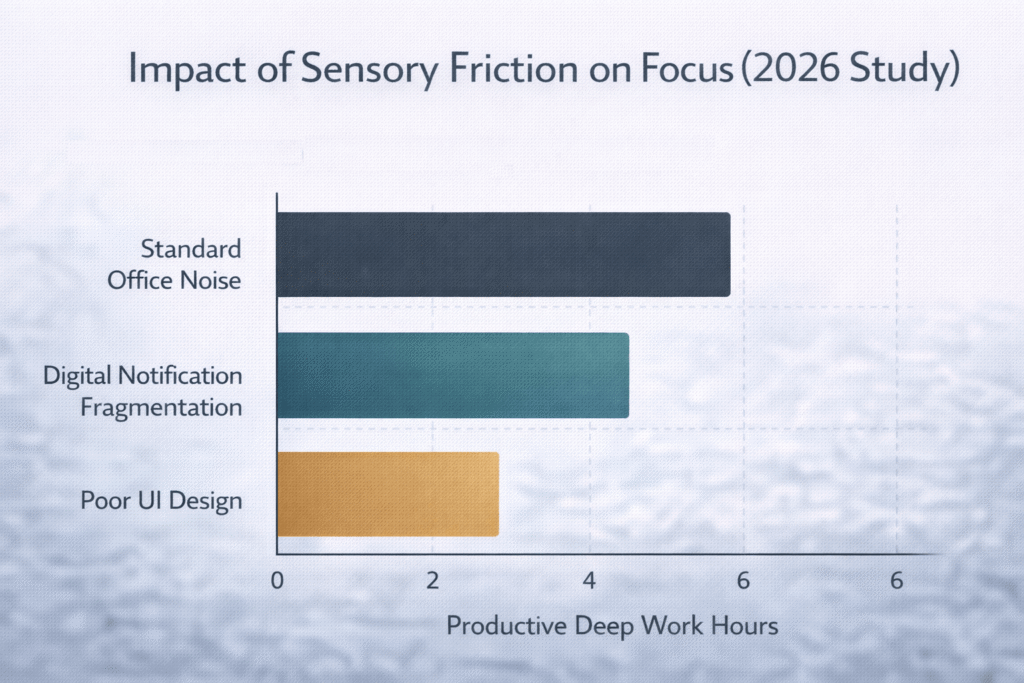
The legal landscape has also evolved, with the EEOC (Equal Employment Opportunity Commission) providing updated guidelines in early 2026 that specifically address “Sensory and Cognitive Accessibility.” These regulations move beyond physical ramps to include digital and sensory barriers. Employers are now being evaluated on their ability to provide “reasonable digital accommodations,” which may include noise-canceling technology, focus-enhancing software, and alternative training formats. The following table illustrates the 2026 transition from traditional to neuro-ergonomic standards:
| Feature | Traditional Standard (2020s) | Neuro-Ergonomic Standard (2026) | Technical Focus |
| Workspace Design | Open-Plan / Hot-Desking | Activity-Based Focus Pods | Sensory Control |
| Meeting Culture | Synchronous / Impromptu | Structured / Asynchronous | Executive Function |
| Digital UI | Static / High-Density | Adaptive / Low-Friction | Cognitive Overload |
| Performance Metrics | Hours / Presence | Outcome-Based / Cognitive Flow | Autonomy & Trust |
Navigating these regulations requires a technical understanding of Universal Design for Learning (UDL) principles applied to the corporate setting. This means providing multiple means of representation, expression, and engagement. For a career professional, being able to articulate these needs during the “Salary Disclosure” and “Benefits Negotiation” phase is a critical skill. In 2026, neuro-inclusive benefits—such as access to cognitive coaches or specialized neuro-feedback tools—are becoming as standard as traditional dental or vision insurance.
Furthermore, the audit trail for compliance is increasingly data-driven. Companies are now required to demonstrate that their internal Talent Marketplaces do not inadvertently penalize neurodivergent individuals through “algorithmic bias” in performance reviews. This has led to a surge in demand for Neuro-Inclusion Consultants who can bridge the gap between legal requirements and technical implementation, ensuring that the “skills-first” revolution actually includes the full spectrum of human cognition.
Technical Implementation of “Focus Pods” and Asynchronous Deep Work
The physical manifestation of 2026 cognitive ergonomics is found in the Activity-Based Workspace (ABW). The “Focus Pod” has replaced the cubicle as the primary unit of productivity. These pods are acoustically isolated, climate-controlled, and equipped with biodynamic lighting that can be adjusted to support different cognitive states—from high-intensity brainstorming to calm, analytical reflection. This level of environmental control is essential for managing sensory processing sensitivities, which affect a significant portion of the high-talent workforce.
Beyond the physical, the Technical Infrastructure of a 2026 workplace must support asynchronous deep work as the default mode. This involves the use of “state-aware” communication platforms that respect an employee’s Focus Status. If a developer is in a “Deep Work Flow,” the system automatically buffers all non-emergency communications, providing a technical shield against the “interruption cost” that typically degrades cognitive performance. This is not just a cultural shift but a software integration that prioritizes mental continuity over immediate response times.
Training managers to lead “Neuro-Diverse Teams” involves a deep dive into Executive Function Support. This means moving away from vague instructions to “explicit documentation” and “micro-milestone” tracking. In 2026, the most effective managers are those who act as “Cognitive Architects,” structuring tasks to minimize the administrative burden on the employee, thereby freeing up their prefrontal cortex for the specialized, high-value work they were hired to perform.
Auditing Cognitive Accessibility in Corporate Software Ecosystems
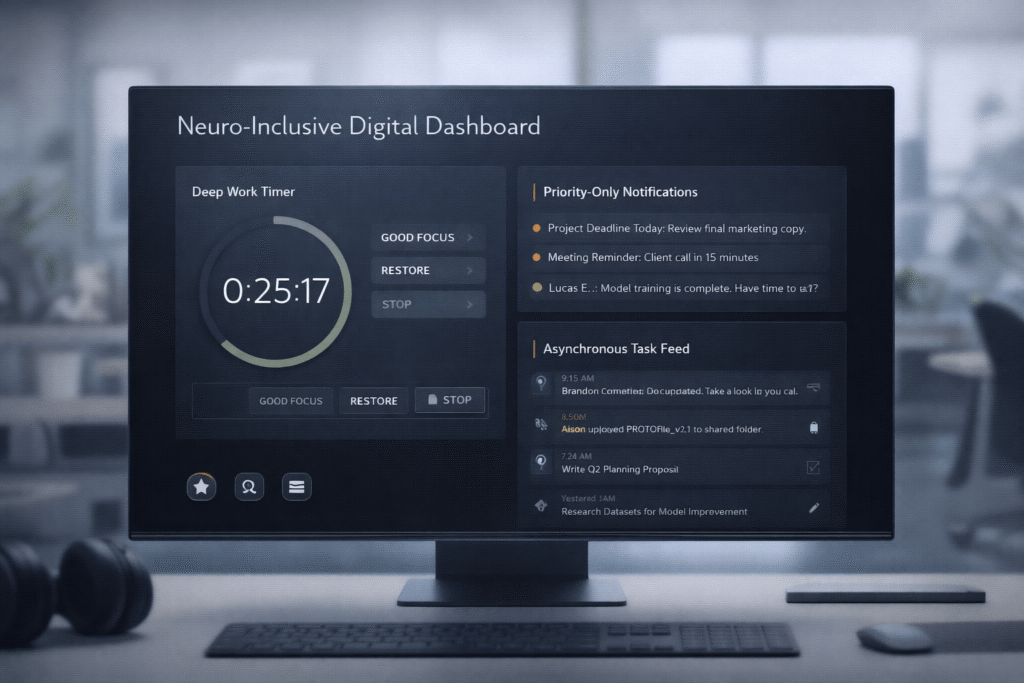
As work moves almost entirely into digital interfaces, the UX (User Experience) of internal software has become a critical factor in career success. Poorly designed enterprise tools—characterized by high “visual noise,” confusing navigation, and inconsistent logic—create a massive Cognitive Tax on employees. In 2026, auditing these ecosystems for “Cognitive Accessibility” is a standard part of corporate IT strategy. This involves testing software for “Predictability,” “Minimalism,” and “Multi-Modal Support” (the ability to interact via voice, text, or visual diagrams).
For the employee, this means that the “tools of the trade” must be customizable. A Neuro-Dashboard in 2026 allows a professional to strip away all non-essential features, leaving only the data and inputs required for the task at hand. This “contextual UI” reduces the split-attention effect and allows for a more direct connection between the worker’s intent and the system’s output. Organizations that fail to provide these malleable interfaces find themselves losing top talent to competitors who treat digital ergonomics as a core employee right.
To ensure a workplace is truly cognitively accessible, the following Audit Checklist is utilized by leading 2026 firms:
- Sensory Control: Presence of quiet zones, dimmable lighting, and noise-mitigation protocols.
- Communication Clarity: Use of standardized templates, explicit deadlines, and “no-meeting” days.
- Software Simplicity: Low-density UIs, customizable notification hierarchies, and keyboard-first navigation.
- Task Architecture: Breaking complex projects into “cognitively digestible” units with clear dependencies.
- Support Systems: Access to neurodiversity resource groups and specialized mental health benefits.
FAQ: Neurodiversity and Cognitive Performance
How does the 2026 “Skills-First” hiring approach specifically benefit neurodivergent candidates?
The “Skills-First” revolution moves the focus away from “social fit” and “university prestige”—areas where neurodivergent individuals often face systemic bias—and toward verifiable technical competency. By using objective work-sample tests and “portfolio-based” assessments, companies can identify high-level talent based on what they can actually do, rather than how well they navigate the traditional, often cognitively overwhelming, multi-stage interview process.
What is the legal standing of “Neuro-Data Privacy” if a company uses focus-tracking software?
In 2026, new Data Sovereignty laws in several states (led by California) prohibit employers from using “neuro-monitoring” data for disciplinary actions. While a company can offer focus-tracking tools as an “opt-in” benefit for personal productivity, the data must remain the property of the employee. Any attempt to “score” an employee based on their brainwaves or focus metrics is a high-risk legal “red flag” that can lead to significant litigation under both privacy and disability discrimination statutes.
Can an employee demand a “Permanent Remote” status as a reasonable accommodation under the 2026 ADA guidelines?
The answer is increasingly “Yes,” provided the job functions can be performed remotely and the physical office environment creates an “undue cognitive burden” that cannot be mitigated through other means. In 2026, the courts have leaned toward supporting remote work as a primary accommodation for sensory processing disorders and severe executive functioning challenges, placing the burden on the employer to prove why physical presence is a “business necessity.”
How do “Ageless Teams” and “Neurodiversity” intersect in the 2026 workplace?
These two trends are highly complementary. As professionals work later into their lives, they often experience “acquired neurodiversity” through age-related cognitive shifts. By building a workplace that is cognitively ergonomic for neurodivergent individuals, companies are simultaneously future-proofing their environment for an aging workforce. A “Cognitive Ergonomic” standard ensures that high-level expertise remains accessible and productive, regardless of the individual’s age or neurological profile.
About the Author

Vinícius Andrade writes about the practical side of personal growth — employee benefits, career moves, personal finance, and everyday wellbeing. He turns dense rules and jargon into steps anyone can act on, so readers spend less time decoding fine print and more time making decisions that actually improve their lives.
