

By 2026, the scientific community has reached a consensus: the brain is not a self-sustaining organ, but a high-maintenance engine that requires a nightly “power wash.” This revelation centers on the Glymphatic System, a macro-level waste clearance pathway that was only theorized a decade ago but is now the primary KPI for cognitive longevity. In the high-stakes professional environment of 2026, sleep is no longer viewed through the lens of psychological rest, but through the technical lens of Metabolic Depuration.
The glymphatic system functions as the brain’s private sanitation department, working up to ten times more efficiently during deep, slow-wave sleep. It utilizes the brain’s “glial” cells to shrink slightly, opening up interstitial spaces that allow Cerebrospinal Fluid (CSF) to rush through the parenchyma, flushing out neurotoxic metabolic byproducts like beta-amyloid and tau proteins. In 2026, failing to optimize this system is technically recognized as allowing “neural plaque” to accumulate, leading to the brain fog and executive dysfunction that define modern cognitive burnout.
As we navigate the complexities of 2026, the focus has shifted from the duration of sleep to the Efficiency of Clearance. We now understand that five hours of high-velocity glymphatic flushing is technically superior to eight hours of shallow, fragmented sleep. This realization has birthed the “Glymphatic Engineering” movement, where individuals use specific biological and environmental levers to ensure their brain’s nightly reset is as aggressive and thorough as possible.
Glymphatic failure isn’t just a sleep issue; it’s a structural leak in the brain’s long-term cognitive integrity. In 2026, we don’t just sleep to dream; we sleep to purge.
Aquaporin-4 and the Mechanics of Neural Flow
The technical “valves” of the glymphatic system are the Aquaporin-4 (AQP4) water channels located on the end-feet of astrocytes. In 2026, AQP4 density and polarization are the gold standards for measuring brain health. These channels facilitate the movement of CSF into the interstitial space, driven by the rhythmic pulsations of the brain’s arteries. Without functional AQP4 channels, the brain technically remains in a state of chronic metabolic “congestion,” regardless of how many hours you spend in bed.
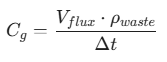
The efficiency of this process is often modeled in 2026 using the Glymphatic Clearance Rate (Cg), which quantifies the volume of waste removed per unit of time:
To maximize this rate, the 2026 professional must focus on three primary mechanical factors:
- Arterial Pulse Pressure: Strong, rhythmic cardiac output is needed to “pump” the fluid through the neural tissue.
- Interstitial Space Volume: The brain must technically “shrink” (via norepinephrine suppression) to allow fluid to pass between cells.
- Delta Wave Synchrony: The slow, high-amplitude brainwaves of deep sleep act as a biological bellows, timing the fluid exchange with surgical precision.
The 2026 Sleep Stack: Pacing the Glymphatic Pulse
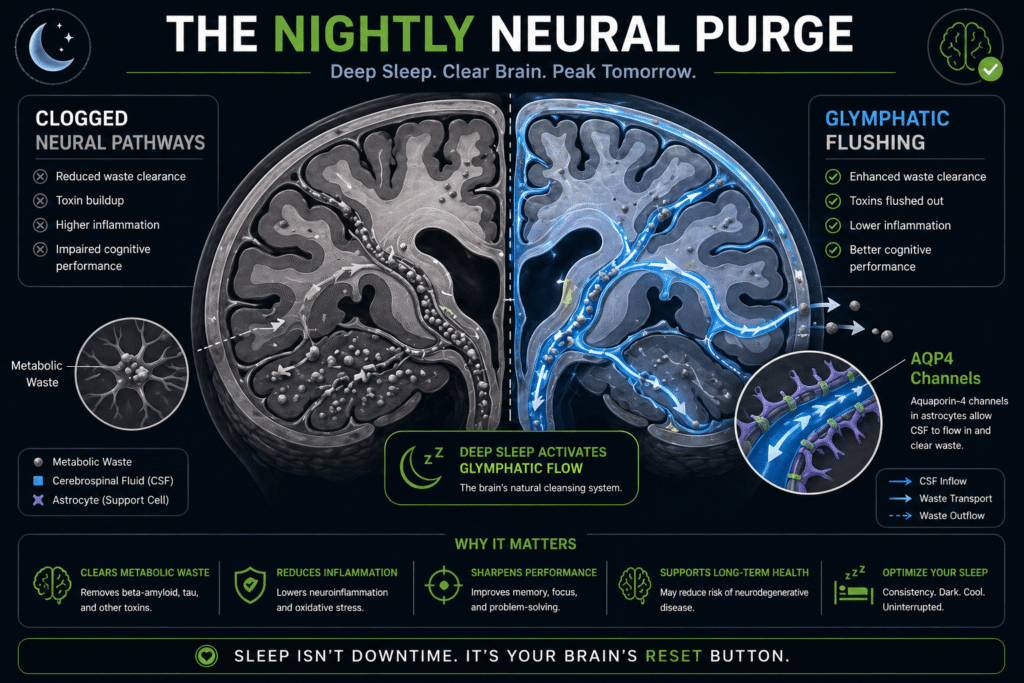
In 2026, “going to sleep” is a multi-step engineering protocol designed to maximize the Cg formula. The goal is to reach Stage 3 (N3) sleep as quickly as possible and maintain the high-amplitude oscillations required for AQP4 activation. Modern wearables now feature “Glymphatic Scores” that tell you exactly how much metabolic waste was likely cleared based on your movement, heart rate variability, and neural frequency. To achieve a “Master-Level” clearance in 2026, follow this 5-step technical protocol:
- Lateral Positioning: Sleep on your side. Research has proven that the lateral position technically increases glymphatic transport by 25% compared to supine or prone positions.
- Thermal Sink Management: Use a cooling mattress to drop your core temperature by 1.5°C. Lower brain temperatures are a prerequisite for the interstitial expansion required for flushing.
- The 3-Hour Fasting Window: Consuming calories too close to sleep keeps insulin high, which technically inhibits the transition into the deep, waste-clearing stages of sleep.
- Caffeine Half-Life Audit: Terminate caffeine intake at least 10 hours before sleep to ensure that adenosine receptors are clear, allowing for maximum Delta-wave amplitude.
- Neural Air-Gapping: Use red-spectrum lighting and EMF shielding to prevent “micro-arousals” that pause the glymphatic pump throughout the night.
Circadian Rhythm as the Command Center
The “Command Center” of the glymphatic system is the Suprachiasmatic Nucleus (SCN), the brain’s master clock. In 2026, we have discovered that the opening and closing of AQP4 channels are not just a response to sleep, but are technically dictated by Circadian Entrainment. If your body doesn’t know what time it is, the glymphatic system will not engage its full flushing capacity, even if you are unconscious.
This is why 2026 wellness advocates prioritize “Morning Anchoring”—exposure to high-intensity blue light within 20 minutes of waking. This technically sets the “Glymphatic Timer,” ensuring that 16 hours later, the brain is biologically primed to initiate the metabolic purge. Without this circadian anchor, the brain’s “trash collection” becomes sporadic and inefficient, leading to the cumulative cognitive debt that characterizes early-onset neurodegeneration.
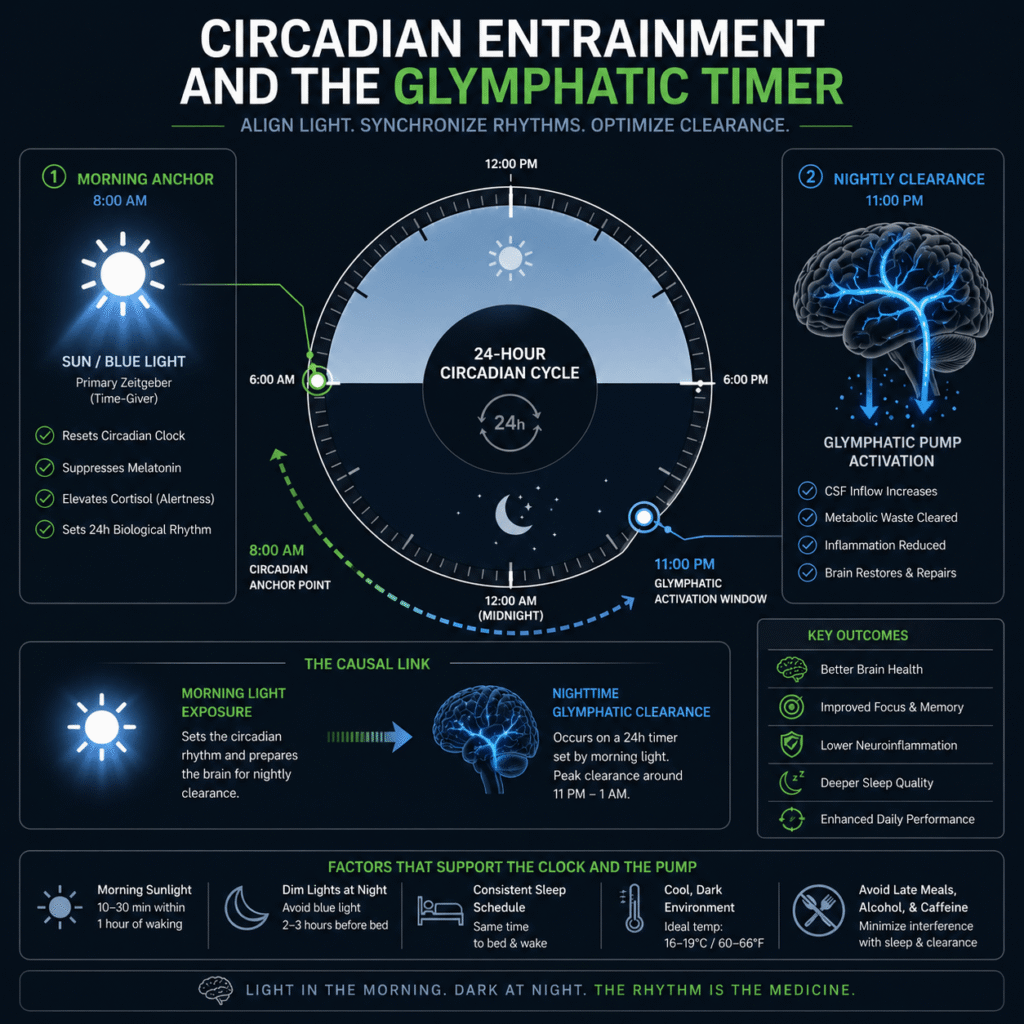
Furthermore, 2026 technology allows for the synchronization of the Peripheral Clocks (in the liver and heart) with the SCN. When these systems are in phase, the arterial pulsations that drive Cg are at their strongest. In this sense, the glymphatic system is the ultimate “System of Systems,” requiring perfect harmony between your light environment, your cardiovascular health, and your metabolic timing.
FAQ: Mastering Your Brain’s Nightly Reset
Why is side-sleeping so much better for brain detox in 2026?
It is a matter of Fluid Dynamics. In the lateral position, gravity assists the heart in maintaining the arterial pulse pressure needed to push CSF through the brain’s complex tissue. Supine (back) sleeping can sometimes cause slight airway restrictions or venous pressure changes that technically slow down the glymphatic “current.”
Does alcohol affect the glymphatic system?
Technically, alcohol is a “Glymphatic Poison.” While it might help you fall asleep faster, it suppresses Slow-Wave Sleep (SWS), which is the only stage where significant waste clearance occurs. In 2026, using alcohol to “relax” is viewed as a technical failure, as it results in a brain that is literally dirtier the next morning.
Can exercise during the day improve my nightly detox?
Yes. Physical activity increases the production of brain-derived neurotrophic factor (BDNF) and improves vascular elasticity. In 2026 terms, exercise “upgrades the plumbing,” making the arterial pulsations more effective at driving the CSF through the brain when you finally hit the pillow.
What is the role of “Glymphatic Supplements” like Melatonin in 2026?
Melatonin is not just a sleep hormone; it is a powerful Glymphatic Antioxidant. In 2026, low-dose, time-released melatonin is used to “prime” the AQP4 channels and protect the neural tissue from the oxidative stress that occurs during the clearing process.
Are there wearables that can actually measure my brain detox?
While we can’t yet measure fluid flow directly in a consumer device, 2026 wearables use PPG (Photoplethysmography) and EEG to estimate the Cg index. They look for the “Glymphatic Pulse”—a specific signature of slow-wave activity combined with a low, stable heart rate—to tell you if your “purge” was successful.
How does brain detox relate to Alzheimer’s prevention?
Alzheimer’s is increasingly viewed in 2026 as a “Systemic Failure of Clearance.” When the glymphatic system underperforms for decades, beta-amyloid builds up and becomes “fixed” in the tissue. By optimizing your glymphatic efficiency now, you are technically engaging in the most effective long-term defense against neurodegenerative plaque formation.
About the Author

Vinícius Andrade writes about the practical side of personal growth — employee benefits, career moves, personal finance, and everyday wellbeing. He turns dense rules and jargon into steps anyone can act on, so readers spend less time decoding fine print and more time making decisions that actually improve their lives.
