

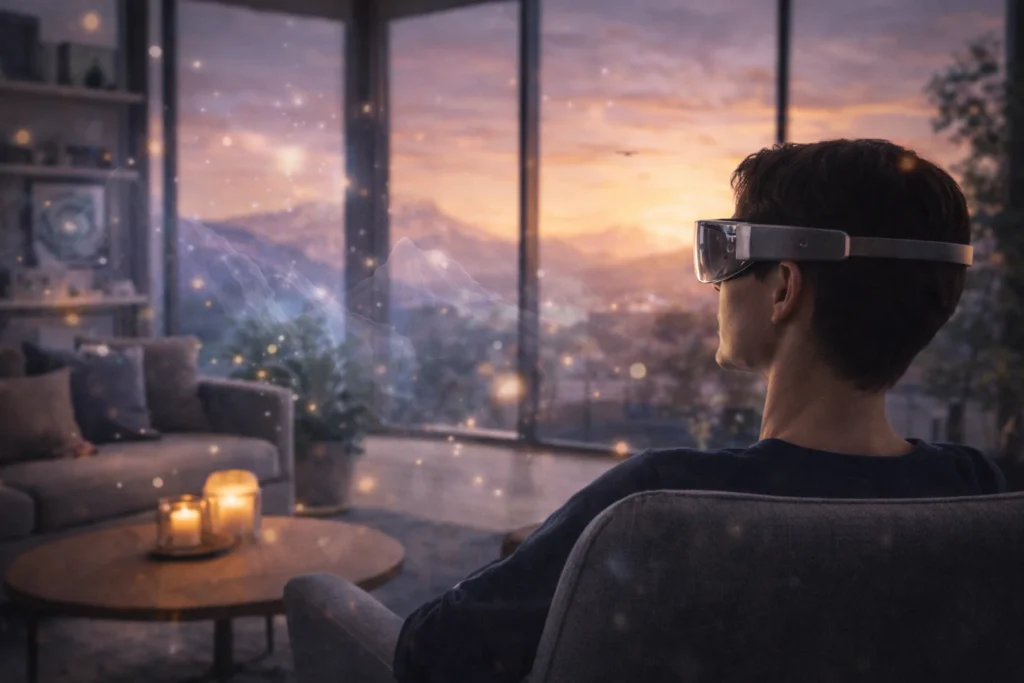
By 2026, the concept of the “home” has undergone a profound technical reassessment. We have moved beyond viewing our living spaces as mere shelters or aesthetic statements; they are now classified as Bio-Integrated Sanctuaries. In this new era, “Spatial Wellness” is a rigorous engineering discipline that treats the indoor environment as a primary determinant of biological health. The 2026 living room is no longer just a place to relax—it is a proactive extension of the human immune system, designed to filter stressors and optimize physiological recovery through passive intervention.
The shift toward spatial wellness was driven by the realization that modern humans spend approximately 90% of their lives indoors. In the high-density, high-pollutant environment of 2026, a home that lacks integrated health systems is viewed as a technical liability. Today’s wellness-focused residences utilize Environmental Intelligence (EI)—a network of sub-perceptual sensors that monitor CO2 levels, Volatile Organic Compounds (VOCs), and particulate matter (PM2.5) in real-time, adjusting the “Atmospheric Load” without human prompting.
This evolution represents the transition from “Active Wellness” (where you must remember to take a supplement) to “Passive Wellness” (where your environment automatically optimizes your biology). In 2026, a healthy home is a managed asset that requires constant calibration of light, air, and sound. It is the technical fulfillment of the sanctuary ideal, where the four walls of your living room work as hard as your biological systems to maintain homeostasis.
In 2026, we have realized that you cannot achieve peak performance in a biological vacuum. Your home is not a backdrop; it is the infrastructure of your longevity, and if it isn’t engineered for health, it is technically working against you.
Circadian Engineering: Light as a Medical Intervention
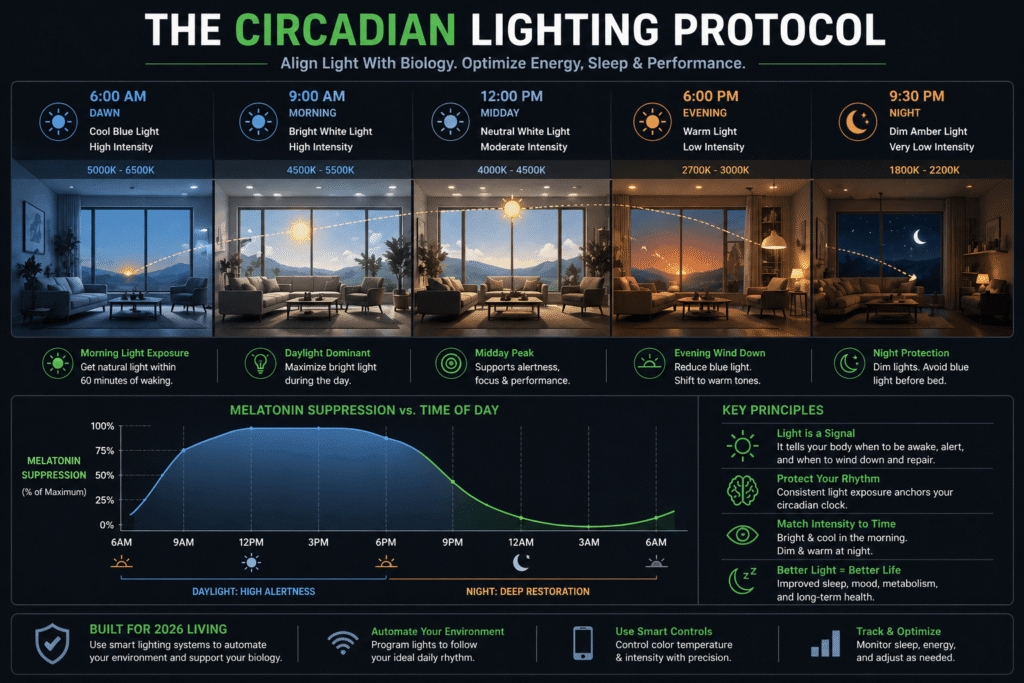
The most significant technical advancement in 2026 spatial wellness is Circadian Lighting. We have moved past simple “smart bulbs” to systems that utilize the Circadian Stimulus (CS) metric to regulate hormonal production. These systems automatically adjust the Correlated Color Temperature (CCT) and spectral power distribution of your living room to match the solar cycle, suppressing melatonin in the morning and facilitating its release in the evening.
The efficiency of a 2026 lighting system is often measured by the Circadian Stimulus formula, which quantifies the effectiveness of light in suppressing melatonin:
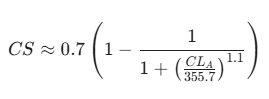
Where CLA represents the circadian lux, a measure of the light’s ability to stimulate the circadian system. By maintaining a high CS during the day and a CS < 0.1 in the evening, 2026 spatial systems ensure that the resident’s sleep-wake cycle remains locked in its natural rhythm, despite the presence of digital screens and artificial environments.
The Neuro-Aesthetic Link: Biophilia and Air Quality Mastery
In 2026, “Biophilic Design” has transitioned from a design trend to a clinical requirement for stress reduction. This involves the integration of Fractal Geometry and living ecosystems into the indoor architecture. Research has technically proven that viewing natural fractal patterns (found in plants and specific water features) reduces cortisol levels by up to 15% in less than 20 minutes. Modern living rooms use AI to manage “Living Walls” that act as biological air scrubbers, while simultaneously providing the visual complexity needed to calm the human nervous system.
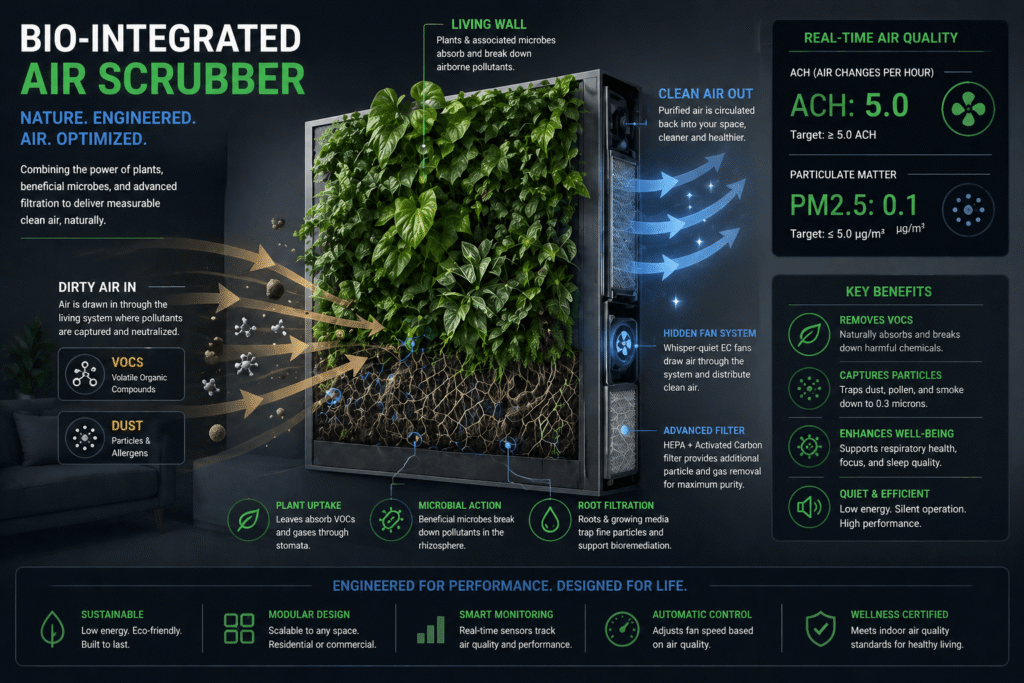
Coupled with biophilia is the concept of Atmospheric Purity. 2026 sanctuaries are equipped with medical-grade HEPA-14 and activated carbon filtration systems that ensure the Air Changes per Hour (ACH) are optimized for the number of occupants. These systems are technically synchronized with your wearable health data; if your bio-sensors detect elevated respiratory stress or systemic inflammation, your home’s “Immune System” increases the ACH to purge potential allergens or pollutants before they can escalate into a health event.
| Feature | Legacy Home (2020) | Spatial Wellness Sanctuary (2026) |
| Air Quality | Random / Seasonal Venting | Real-time HEPA-14 / VOC Purge |
| Lighting | Static (On/Off) | Circadian Stimulus (CS) Tracking |
| Acoustics | Passive (Thick Walls) | Adaptive Active Noise Cancellation |
| Materiality | Aesthetic-driven | Non-toxic / Anti-microbial / Biophilic |
| Wellness Model | Reactive (Treating Symptoms) | Proactive (Environmental Homeostasis) |
FAQ: Navigating the 2026 Spatial Revolution
Is it possible to retrofit an older home with 2026 spatial wellness tech?
Yes. In 2026, the “Wellness Retrofit” market is highly developed. You can install “Smart Atmospheric Hubs” and plug-and-play circadian panels that communicate via standardized spatial protocols. While not as seamless as a ground-up bio-integrated build, a technical retrofit can achieve up to 80% of the health benefits of a purpose-built 2026 sanctuary.
How much does “Spatial Wellness” insurance cost in 2026?
Many 2026 insurers now offer “Safe-Home Credits.” If your living space is technically certified to maintain specific air quality and circadian standards, your health and life insurance premiums can be reduced by 10% to 20%. The home is seen as a “preventative medical device,” reducing the actuarial risk for the provider.
What about data privacy with all these indoor sensors?
This is a critical technical concern in 2026. Premium spatial wellness systems utilize “Local Stack” Processing, where all environmental and biometric data is processed on a local server within the home rather than the cloud. This ensures that your physiological responses to your environment remain private and “Air-Gapped” from external data brokers.
What is the “Noise Ceiling” in a 2026 sanctuary?
Modern spatial wellness utilizes Active Acoustic Management. Instead of just silence, these systems use “Sound Masking” (like brown noise or natural soundscapes) to maintain a consistent acoustic floor of around 30 to 35 decibels. This technically prevents the “startle response” caused by sudden external noises (traffic, sirens), keeping your autonomic nervous system in a state of rest.
Does humidity play a role in 2026 spatial health?
Absolutely. 2026 systems target a Technical Humidity Band of 40% to 60%. This range is optimal for human respiratory health and skin hydration, while being low enough to inhibit the growth of mold and high enough to reduce the transmission velocity of airborne pathogens.
Are living walls difficult to maintain with 2026 tech?
The “Living Walls” of 2026 are fully automated. They feature self-dosing hydroponic systems and specialized UV lighting that ensures plant health. Sensors in the soil (or growth medium) alert the home’s AI if a specific plant is underperforming, making biophilic maintenance a technical background process rather than a manual chore.
About the Author

Vinícius Andrade writes about the practical side of personal growth — employee benefits, career moves, personal finance, and everyday wellbeing. He turns dense rules and jargon into steps anyone can act on, so readers spend less time decoding fine print and more time making decisions that actually improve their lives.
