

The Low Income Home Energy Assistance Program (LIHEAP) has entered the 2026 fiscal year with a complex and robust funding ecosystem designed to mitigate the volatility of the global energy market. For 2026, the Office of Community Services (OCS) has mobilized approximately $3.7 billion in total federal support, a figure comprised of the standard block grant allocations and a critical $100 million supplemental infusion from the Bipartisan Infrastructure Investment and Jobs Act (IIJA). This multi-layered financial framework is technically designed to provide states with the liquidity needed to address both immediate heating crises and long-term energy efficiency improvements, ensuring that the nation’s most vulnerable populations are shielded from seasonal utility spikes.
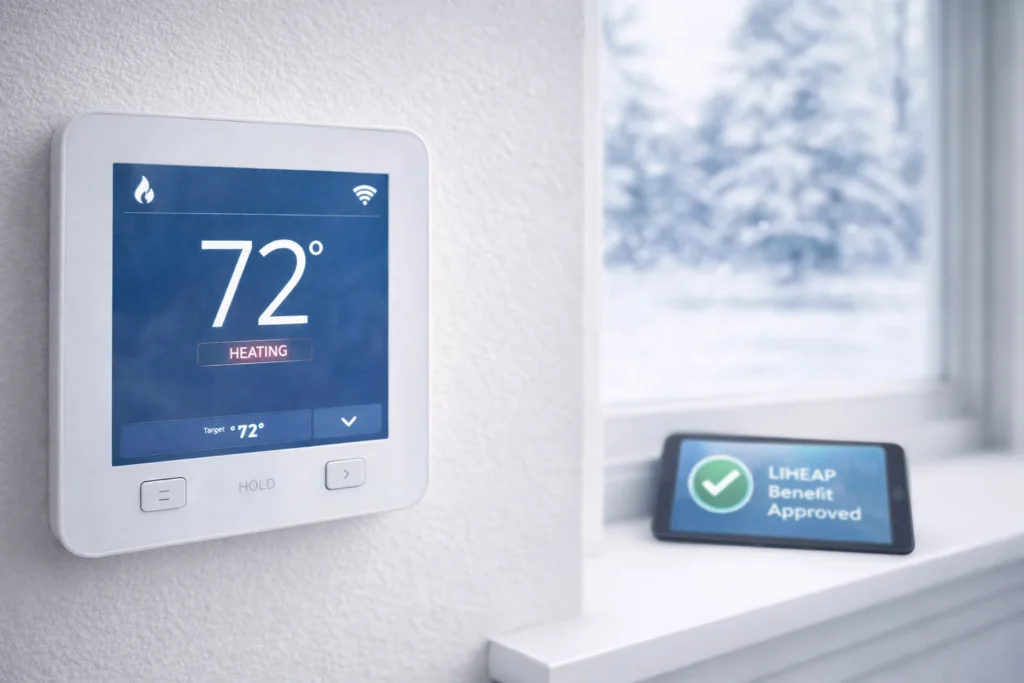
The distribution of these funds in 2026 follows a strategic “hold-harmless” provision, which serves as a fiscal stabilizer for state agencies. This provision ensures that despite fluctuating census data or shifting economic indicators, state and territorial allocations remain at a level consistent with previous high-demand years. By maintaining this funding floor, the federal government allows local agencies to plan their Regular Heating Assistance and Crisis Intervention programs with a high degree of predictability, preventing the mid-season “fund exhaustion” that previously plagued the program during extreme weather events.
Furthermore, the 2026 LIHEAP strategy places an unprecedented emphasis on the integration of the Weatherization Assistance Program (WAP). Rather than simply paying a one-time utility bill, a significant portion of the 2026 supplemental funding is being diverted into “thermal integrity” projects. This includes technical upgrades such as attic insulation, furnace tuning, and the sealing of building envelopes. By addressing the root cause of high energy costs—the inefficiency of the housing stock—the 2026 program aims to permanently reduce the “energy burden” of low-income households, moving from a model of reactive subsidy to one of proactive energy management.
Technical Eligibility: Navigating FPG vs. SMI Thresholds
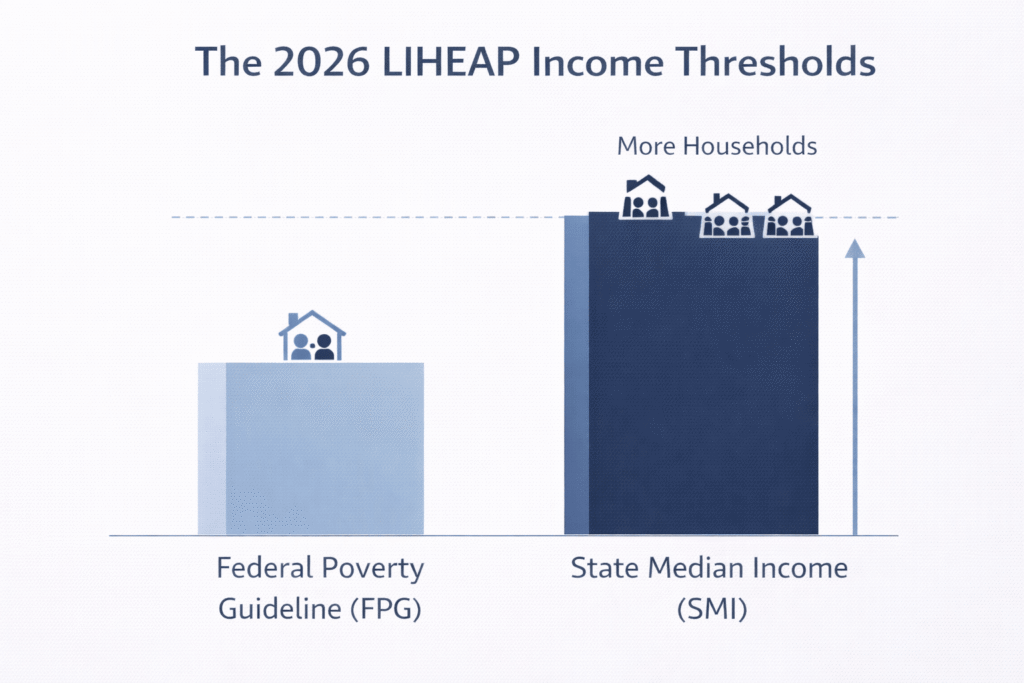
Determining eligibility for LIHEAP in 2026 requires a technical understanding of the two primary metrics used by state agencies: the Federal Poverty Guidelines (FPG) and the State Median Income (SMI). Federal law allows states to set their maximum income limits anywhere between 110% of the FPG and either 150% of the FPG or 60% of the SMI—whichever is higher. This flexibility is crucial in 2026, as it allows higher-cost states to expand their safety net to include “working poor” families who may earn too much for traditional welfare but still struggle with the high cost of regional energy.
In states that utilize the 60% SMI standard, the eligibility ceiling is significantly more inclusive than those using the 150% FPG metric. This is particularly relevant in 2026 for coastal and urban states where the cost of living has outpaced national averages. For these agencies, the SMI represents a more accurate technical reflection of a household’s actual economic standing within their specific community. The following table highlights the finalized 2026 SMI thresholds for key states participating in this expanded eligibility model:
| Household Size | California | Illinois | Rhode Island |
| 1 Person | $3,331.66 | $3,332.00 | $3,521.00 |
| 2 People | $4,356.83 | $4,357.00 | $4,604.00 |
| 3 People | $5,382.00 | $5,382.00 | $5,687.00 |
| 4 People | $6,407.16 | $6,407.00 | $6,771.00 |
| 5 People | $7,432.25 | $7,432.00 | $7,854.00 |
The Energy Crisis Intervention Program: 2026 Emergency Triggers
While regular LIHEAP grants provide a one-time seasonal payment, the Energy Crisis Intervention Program (ECIP) is the technical mechanism used to handle immediate, life-threatening utility emergencies. In 2026, an “energy crisis” is not a subjective term; it is defined by specific technical triggers that must be met to bypass the standard 8-to-12-week processing time. State agencies prioritize these claims to prevent disconnections and ensure that heating systems remain functional during periods of sub-freezing temperatures.
The primary triggers for ECIP in 2026 include an imminent shut-off notice from a utility provider or the total depletion of deliverable fuel. For households that rely on propane or heating oil, the technical threshold for a crisis is typically reached when a fuel tank hits 25% capacity or less. Additionally, the total failure of a primary heating source—such as a cracked heat exchanger in a furnace or a non-functional heat pump—qualifies as a technical crisis, allowing for emergency repair or replacement funds that often exceed the standard grant amounts.
The speed of intervention is a statutory requirement under the 2026 federal guidelines. Once a household is determined to be in a crisis, the local agency must act to resolve the emergency within 48 hours. However, in cases where the situation is deemed “life-threatening”—such as households with infants, the elderly, or residents requiring electricity for medical devices—the response time is technically accelerated.
In 2026, federal regulations mandate that for all life-threatening energy crises, the LIHEAP agency must provide intervention to resolve the emergency within 18 hours of the application being finalized.
Weatherization and Cooling: The 2026 Pivot to Summer Stability
As the 2026 fiscal year progresses, the LIHEAP program undergoes a technical pivot from Winter Heating to Summer Cooling Assistance. This is a vital component of the program in 2026, as rising global temperatures have made extreme heat just as dangerous as extreme cold in many regions. Cooling assistance in 2026 is no longer limited to the “Deep South”; many Northern states have now implemented summer programs to provide electricity subsidies for air conditioning and the distribution of high-efficiency fans or portable cooling units to vulnerable residents.
The cooling phase of 2026 is also when the Weatherization Assistance Program (WAP) sees its highest activity. By utilizing the 2026 supplemental infrastructure funds, agencies can perform technical “building audits” to identify energy leaks. Using infrared cameras and blower-door tests, technicians can pinpoint exactly where a home is losing thermal energy. This data-driven approach allows for the installation of high-efficiency cooling systems and solar-reflective roofing materials that significantly lower the ambient temperature of a home without increasing its carbon footprint or utility demand.
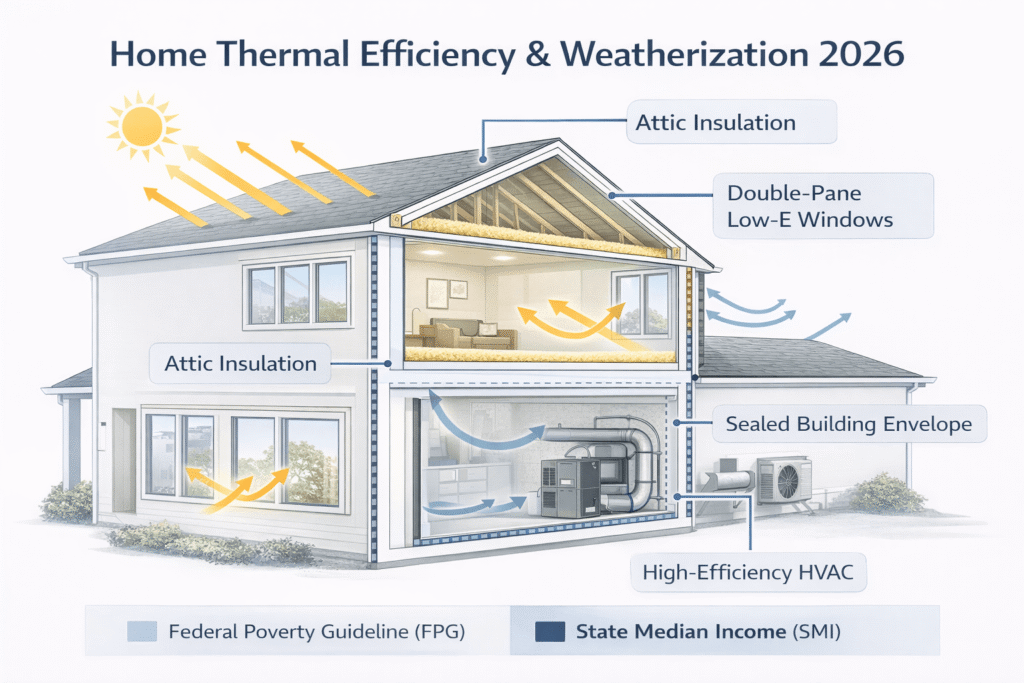
Finally, the 2026 WAP standards have introduced a “whole-home” health component. Beyond just insulation, the 2026 program technically addresses indoor air quality (IAQ) issues that are often exacerbated by poor ventilation. By installing energy-recovery ventilators (ERVs) and moisture-control systems, the program ensures that as homes become more “airtight” to save energy, they remain healthy environments for the residents. This holistic technical approach makes the 2026 LIHEAP/WAP integration a model for sustainable urban and rural housing assistance.
The “Energy Burden” Calculus: Why High Bills Alone Aren’t Enough
A common misconception in 2026 is that a high utility bill automatically qualifies a household for the maximum LIHEAP grant. In reality, state agencies use a technical formula known as the “Energy Burden Calculus” to prioritize funds. This formula evaluates the percentage of a household’s gross income that is spent on energy. Mathematically, the Energy Burden (EB) is defined as:

In 2026, the highest benefit amounts are reserved for those whose energy burden exceeds a specific threshold—often set at 10% to 15% of their total income. This means a family with a $3,000 annual bill and a $20,000 income will technically receive a larger grant than a family with a $4,000 bill but a $50,000 income. This “burden-based” prioritization ensures that the 2026 funds are directed toward those for whom energy costs represent a genuine threat to their ability to pay for other essentials like food and medicine.
FAQ: Advanced LIHEAP Compliance in 2026
Do winter moratoriums protect me from having to pay my bill in 2026?
No. While 42 states have winter shut-off moratoriums that prevent disconnection during extreme cold, these are not debt-forgiveness programs. You are still technically liable for every kilowatt-hour or gallon of fuel consumed. If you do not make “good-faith payments” or utilize LIHEAP grants during the moratorium, you may face a massive “catch-up” bill in the spring, which could lead to an immediate disconnection once the temperature threshold is no longer met.
Can I receive LIHEAP if my heating or cooling costs are included in my rent?
Yes, in many jurisdictions. If your rent includes utilities, you can still apply for LIHEAP if you can demonstrate that your energy costs are a “technical pass-through” in your lease. In 2026, agencies often issue a modified cash grant directly to the tenant or a partial payment to the landlord, provided that the landlord is not already receiving a federal housing subsidy that covers the energy costs (such as certain Section 8 or Public Housing arrangements).
How long is the 2026 LIHEAP payment timeline for non-crisis grants?
For regular heating or cooling assistance, the 2026 processing time typically ranges from 8 to 12 weeks. This delay is due to the high volume of applications and the multi-step verification process required by the state. Beneficiaries are encouraged to apply as early as the “pre-season” window opens to ensure their grant is applied to their account before the peak usage months of January (for heating) or July (for cooling).
Is there technical interoperability between SNAP (Food Stamps) and LIHEAP in 2026?
Yes. Many states utilize a process known as “Categorical Eligibility” or the “Heat and Eat” program. If a household receives a nominal LIHEAP payment (sometimes as low as $21 in 2026), it can technically trigger a higher Standard Utility Allowance (SUA) in their SNAP calculation. This interoperability allows the household to receive a higher monthly food stamp benefit, effectively leveraging a small energy grant into a larger nutritional assistance boost.
What is the process for getting a primary heating system repaired through LIHEAP in 2026?
To receive funds for a furnace or heat pump repair, you must technically apply through the Energy Crisis Intervention Program (ECIP) or the Weatherization (WAP) track. A technician will be dispatched to perform a “Diagnostic Audit” to determine if the system can be tuned or if a full replacement is required. In 2026, if the system is deemed a safety hazard (such as leaking carbon monoxide), the agency can authorize an emergency replacement with a high-efficiency unit, often within 48 to 72 hours of the audit completion.
About the Author

Vinícius Andrade writes about the practical side of personal growth — employee benefits, career moves, personal finance, and everyday wellbeing. He turns dense rules and jargon into steps anyone can act on, so readers spend less time decoding fine print and more time making decisions that actually improve their lives.
