

The federal housing landscape in 2026 has reached a definitive milestone with the full maturation of the National Standards for the Physical Inspection of Real Estate (NSPIRE). This transition marks the official end of the legacy Housing Quality Standards (HQS) era, shifting the Department of Housing and Urban Development’s (HUD) focus from purely aesthetic criteria to a more rigorous, health-and-safety-centric protocol. For the millions of families utilizing Housing Choice Vouchers (HCV), this means that their living environments are now subject to modernized technical benchmarks that prioritize “functional adequacy,” specifically regarding air quality, electrical safety, and structural integrity.
This 2026 overhaul is not merely administrative; it is a response to the evolving risks in the domestic rental market and a move toward data centralization. As urban densities increase, the technical requirements for multi-family dwellings have tightened, forcing Public Housing Agencies (PHAs) to adopt a “compliance-first” stance with landlords. HUD now utilizes a centralized digital dashboard to track inspection failures in real-time across the country, allowing for a more aggressive enforcement of repair timelines and ensuring that federal subsidies are only directed toward properties that meet the modernized 2026 safety code.
Furthermore, the 2026 regulatory environment has introduced a higher degree of transparency for both tenants and owners. By moving away from the subjective “pass/fail” aesthetics of the past, NSPIRE provides a standardized scoring system that reduces the variability between different inspectors. For beneficiaries, this translates to a more predictable and responsive system where critical hazards are technically easier to identify and penalize. Understanding these new standards is essential for anyone looking to enter a new lease or maintain their current housing subsidy in this newly modernized and audited marketplace.
Life-Safety Thresholds: The 24-Hour Repair Mandate
The most critical technical component of the 2026 NSPIRE protocol is the classification of “Life-Threatening” (LT) deficiencies. Unlike non-emergency defects that allow for a 30-day corrective window, LT defects trigger a mandatory 24-hour repair clock the moment they are recorded in the inspector’s digital device. If a landlord fails to remediate an LT issue within this strictly monitored window, the PHA is technically required to “abate” (stop) the housing assistance payments until compliance is proven via a re-inspection or a certified photo upload.
Under the 2026 NSPIRE protocols, Life-Threatening deficiencies aren’t just suggestions for repair; they are mandatory 24-hour corrective actions that, if missed, trigger an immediate abatement of government subsidies, protecting the resident’s safety over the owner’s cash flow.
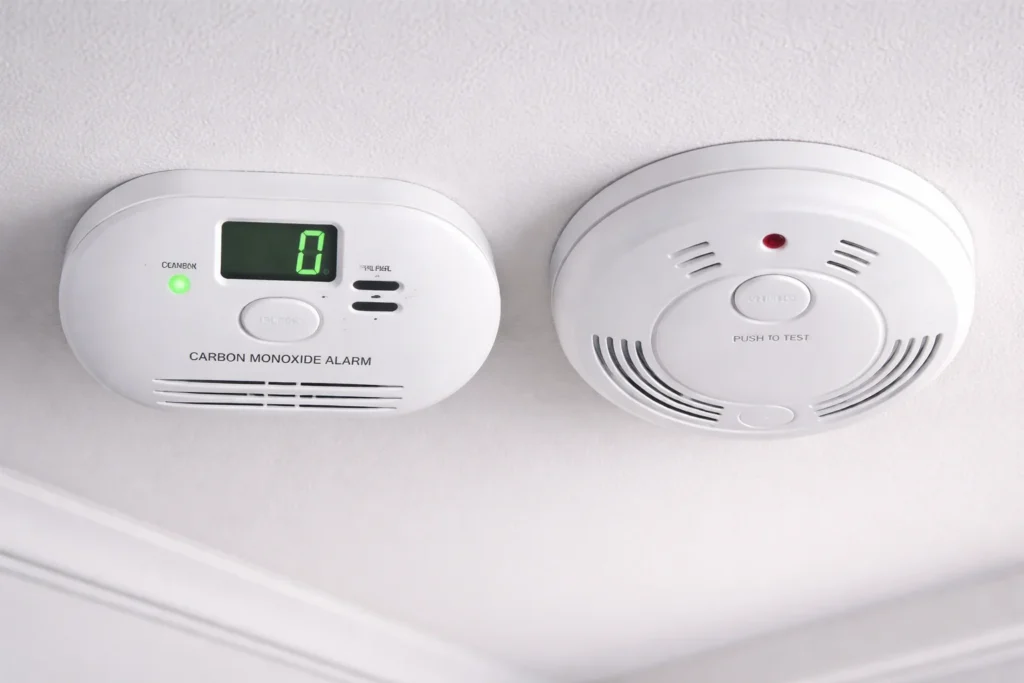
In 2026, the technical requirements for Carbon Monoxide (CO) alarms and smoke detection have been standardized across all states. Regardless of the presence of fuel-burning appliances, every Section 8 unit must have a CO alarm on every level and near every sleeping area. Furthermore, smoke alarms must now be either hardwired into the building’s electrical system or equipped with a 10-year sealed battery. This mandate effectively eliminates the “missing battery” excuse that historically plagued housing inspections, ensuring a consistent and unalterable baseline of fire safety for all federally subsidized residents.
FY 2026 Fair Market Rents and the SAFMR Strategy
The 2026 rental market is being managed through a more granular and localized approach to Fair Market Rents (FMRs). HUD has increasingly shifted toward Small Area FMRs (SAFMRs), which calculate rent subsidies based on specific zip codes rather than broad metropolitan averages. This technical shift is designed to combat “poverty concentration” by allowing voucher holders to afford units in “high-opportunity areas”—neighborhoods with better schools, lower crime rates, and closer proximity to employment hubs. In 2026, if a family moves to a zip code with a higher SAFMR, their voucher’s “buying power” technically increases to match the local market rates.
Navigating this system requires a precise understanding of the “40% Rent Burden Rule.” Under federal guidelines, when a family first moves into a unit where the rent exceeds the PHA’s payment standard, their portion of the rent cannot exceed 40% of their adjusted monthly income. This is an absolute technical ceiling. If the combined rent and utility cost for a selected unit pushes a family past this 40% mark, the PHA will legally deny the lease approval, even if the family is willing to pay the difference.
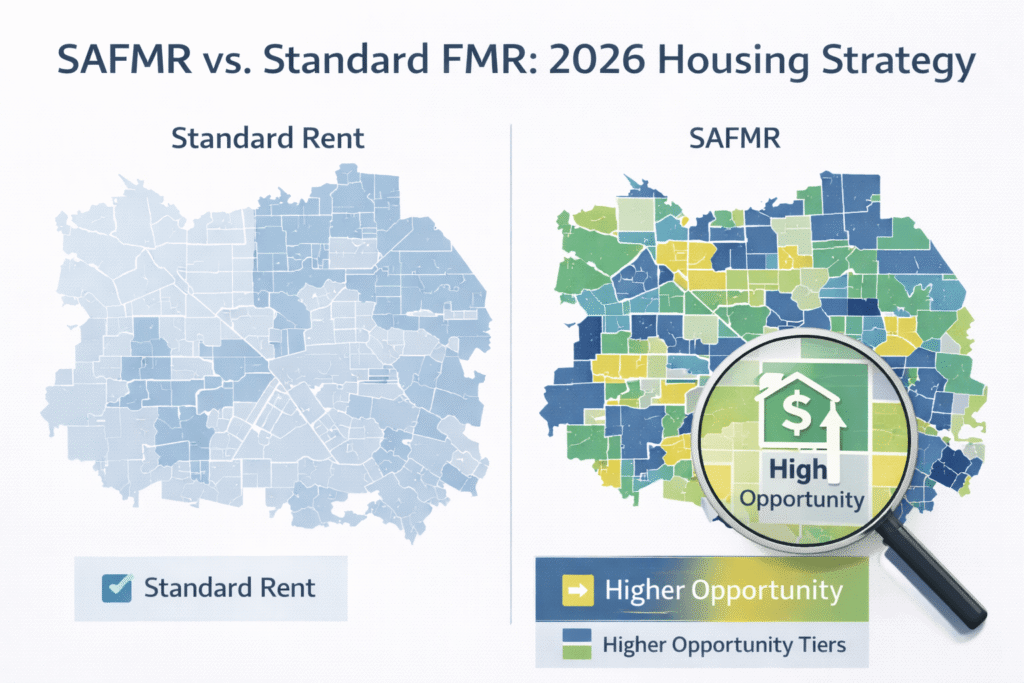
Calculating this “rent burden” requires a meticulous review of the Utility Allowance schedules, which are updated annually in 2026 to reflect the rising costs of electricity, natural gas, and water. PHAs provide these schedules to help tenants estimate their total housing cost before signing a lease. In a SAFMR environment, the utility allowance is subtracted from the payment standard to determine the “maximum contract rent” a landlord can charge. If a tenant fails to factor in these utility estimates, they may find themselves technically disqualified from a unit they thought was within their budget.
Ultimately, the SAFMR strategy in 2026 aims to provide geographic mobility that was previously unattainable for many low-income families. By decoupling rent limits from city-wide averages, HUD is incentivizing landlords in premium neighborhoods to participate in the Section 8 program. For the beneficiary, the 2026 challenge is to identify these high-opportunity zip codes and utilize their SAFMR-adjusted voucher to secure a home that offers a better long-term trajectory for their household, all while staying within the technical 40% income-to-rent ratio.
Portability Logistics: Navigating the Administrative “Handshake”
The concept of “Portability” remains the most powerful feature of the Housing Choice Voucher, allowing a family to move to any jurisdiction in the United States that operates an HCV program. In 2026, the technical process involves a complex administrative “handshake” between your current PHA (the Initial PHA) and the one in your target city (the Receiving PHA). The Initial PHA must first verify that the family is “in good standing”—meaning they have no outstanding debts to a previous landlord and have not committed any serious program violations in the preceding 12 months.
Once the move is approved, the Initial PHA sends a portability packet to the Receiving PHA. This packet contains all of the family’s technical data, including income certifications and household composition. It is vital to note that in 2026, the Receiving PHA’s rules take precedence once the family arrives. This includes different payment standards, utility allowances, and even different screening criteria. A family moving from a rural area to an urban center may find that their voucher covers a smaller percentage of the rent due to the higher local cost of living and different PHA tiering strategies.
The success of a 2026 move often depends on the timing of the “Voucher Briefing” at the new location. Beneficiaries are encouraged to contact the Receiving PHA as soon as their portability packet is sent to schedule their intake interview. In the current high-demand market, a delay in this “handshake” can lead to a voucher expiring before a new lease is signed. Most PHAs now offer these briefings digitally, but the technical requirement to provide updated income and background check data remains a prerequisite for the issuance of the new “moving” voucher.
Billing vs. Absorption: Understanding the Financial Mechanics of Your Move
When you move your voucher in 2026, the Receiving PHA must choose one of two technical paths to fund your housing assistance. This choice is invisible to the landlord but critical for the tenant’s long-term administrative stability:
- The Billing Protocol: The Receiving PHA pays the landlord but invoices your Initial PHA for reimbursement every month. This keeps you technically tied to your old city’s budget. If the Initial PHA faces a funding shortfall in late 2026, they could technically “recall” the portability or deny a rent increase request.
- The Absorption Protocol: The Receiving PHA officially “transfers” you into their own program, using their own budget to pay your subsidy. This is the preferred technical outcome, as it makes you a permanent resident of the new PHA and simplifies all future annual recertifications and inspections.
| Feature | Billing Protocol | Absorption Protocol |
| Funding Source | Initial PHA (Old City) | Receiving PHA (New City) |
| Administrative Risk | Higher if the old city has budget cuts. | Lower; you are fully integrated. |
| Annual Recertification | Coordinated between two agencies. | Handled by the new agency only. |
| Stability | Dependent on the “Initial” agency’s health. | Dependent on the “New” agency’s health. |
The October 2026 GFCI Deadline and Infrastructure Scoring
A major compliance milestone for the 2026 fiscal year is the finalized mandate for Ground Fault Circuit Interrupters (GFCIs). By October 1, 2026, every Section 8 property must have functional GFCIs installed within 6 feet of any water source, including kitchens, bathrooms, and laundry areas. While this has been a recommended safety feature for years, the 2026 NSPIRE protocol will officially begin “scoring” these as critical defects. Landlords who fail to upgrade their electrical infrastructure by this hard deadline will find their properties technically ineligible for new Section 8 lease-ups.
This focus on electrical infrastructure is part of a broader “Scoring and Sampling” strategy used by HUD in 2026. Instead of a simple pass/fail, properties are assigned a technical score based on the severity of the defects found. A high-scoring property (90 or above) may only face a full HUD inspection every three years, while a low-scoring property might be subjected to annual or even semi-annual audits. For the tenant, living in a “High-Scorer” property usually translates to a more stable housing environment, as the landlord is technically incentivized to maintain the building’s infrastructure to avoid the administrative burden and costs of frequent government inspections.
FAQ: Troubleshooting Section 8 Transitions in 2026
Can my PHA deny my move to a higher-cost area in 2026 due to budget constraints?
Yes. While portability is a feature of the program, it is subject to “funding availability.” If you are moving to a city where the Fair Market Rent is significantly higher and the Receiving PHA refuses to “absorb” your voucher, your Initial PHA must pay the difference. If that agency is facing a documented budget deficit in 2026, they can legally deny your request to move to that specific high-cost jurisdiction, provided they offer a formal explanation and demonstrate the shortfall to HUD.
What is the technical difference between “Unit” and “Building Exterior” inspections in 2026?
The 2026 NSPIRE standards have expanded the inspector’s reach beyond your front door. The Building Exterior inspection now scrutinizes common areas, fire escapes, and structural foundations. If a common-area walkway has a major tripping hazard or if the building’s roof shows signs of active leakage, your specific unit can technically “fail” the inspection, even if the interior of your apartment is in perfect condition. This forces a higher level of common area maintenance from landlords who wish to remain in the program.
How often am I technically required to report changes in my household income in 2026?
Most PHAs require you to report any change in income or household composition within 10 to 30 days. In 2026, many agencies utilize “Interim Recertifications” to adjust your rent portion mid-year if your income increases significantly. However, if the increase is considered “sporadic” or “seasonal” (like a small holiday bonus), the PHA may technically choose to delay the rent adjustment until your next annual review. Failure to report these changes promptly is a “program violation” that can lead to the termination of your housing assistance.
What happens if I cannot find a unit that meets NSPIRE standards before my voucher expires?
Vouchers are typically issued for an initial period of 60 days. If you are struggling to find a compliant unit in the 2026 market, you must request an extension before the 60 days are up. Technically, PHAs are encouraged to grant extensions if you can provide a “search log” showing you have been diligent. If you have a disability, you can request an extension as a “Reasonable Accommodation,” which the PHA is legally required to consider under the Fair Housing Act to ensure you have equal access to housing.
Are landlords allowed to charge Section 8 tenants “extra” fees outside of the approved lease?
No. In 2026, it is a strict program violation for a landlord to charge a Section 8 tenant “side payments” for rent that exceeds the PHA-approved amount. Any additional fees for amenities (like parking or laundry) must be clearly outlined in the original lease and approved by the PHA. If a landlord demands extra cash to “make up the difference” between the market rent and the government’s payment standard, you should report this technically as fraud to your caseworker immediately.
About the Author

Vinícius Andrade writes about the practical side of personal growth — employee benefits, career moves, personal finance, and everyday wellbeing. He turns dense rules and jargon into steps anyone can act on, so readers spend less time decoding fine print and more time making decisions that actually improve their lives.
