

The 2026 fiscal year marks a historic turning point for U.S. veterans, featuring a 2.8% COLA increase and a massive expansion of PACT Act benefits that now cover millions of toxic exposure claims.
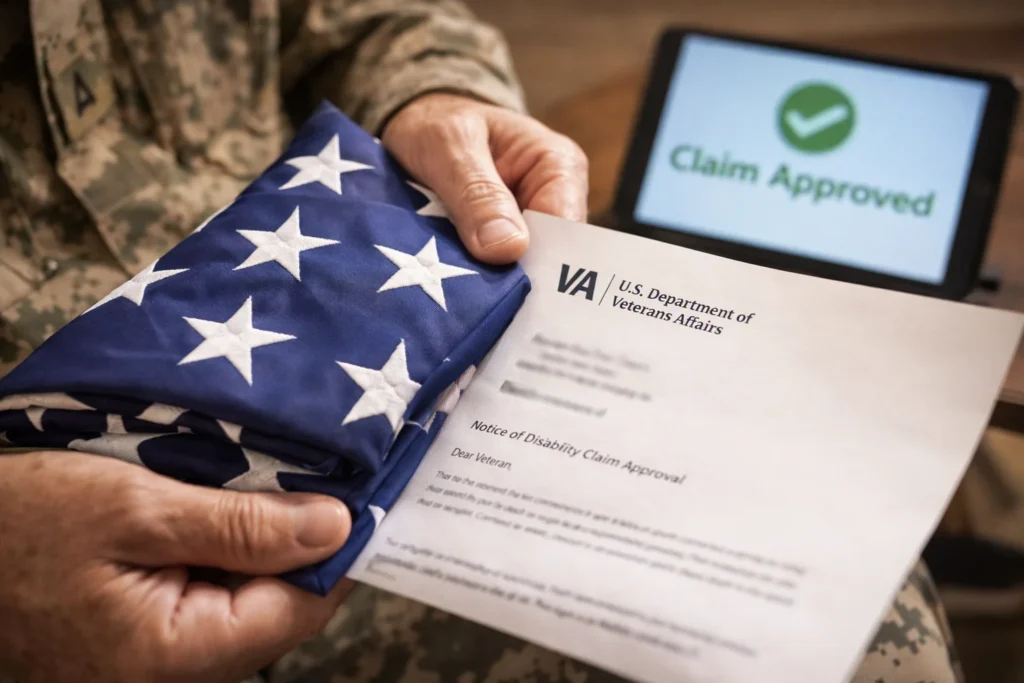
The year of 2026 represents a landmark for the Department of Veterans Affairs (VA) and the millions of veterans navigating the complexities of service-connected compensation. Unlike standard employment raises, the COLA increase is a statutory mandate designed to protect the purchasing power of disabled veterans against the disproportionate rising costs of medical devices, home healthcare services, and specialized prescriptions that often outpace general inflation.
For veterans in 2026, the financial stakes have never been higher. As the VA manages a record-breaking budget, the focus has shifted from mere “claims processing” to a more integrated Total Health and Wealth approach. This means that disability pay is increasingly viewed not just as a standalone check, but as the foundational element of a veteran’s tax-free income strategy. Because VA compensation is 100% exempt from federal and state taxes, a 100% disability rating in 2026 carries a financial weight significantly higher than an equivalent taxable salary, providing a unique economic shield in a volatile market.
Navigating this landscape requires more than just knowing the new rates; it requires a technical understanding of how the VA’s administrative machinery has evolved post-2025. With the integration of AI-assisted claims triaging, the VA has managed to reduce wait times for “fully developed claims,” yet the rigor of C&P (Compensation and Pension) exams has intensified. Veterans must now approach their medical evidence with the precision of a legal brief, ensuring that every symptom is mapped directly to the 2026 Schedule for Rating Disabilities.
The PACT Act Maturity: Toxic Exposure Frameworks in 2026
We have now reached the “Maturity Phase” of the Honoring our PACT Act, the most significant expansion of veteran benefits in over three decades. In 2026, the VA has moved beyond the initial backlog of 2023-2024, refining the technical application of presumptive conditions. This means that for veterans who served in specific “toxic corridors,” the traditional requirement to prove a direct medical link (the “nexus”) between service and illness has been legally waived.
The 2026 implementation of the PACT Act marks the end of the “Nexus Burden,” shifting the legal responsibility from the veteran to the VA for over 20 presumptive conditions, effectively turning service history into a primary medical proof.

Vietnam & Agent Orange Expansion
In 2026, the geographic scope for Agent Orange exposure has reached its final finalized boundaries. This includes veterans who served in:
- Thailand: Specific military bases and perimeters between 1962 and 1976.
- Guam and American Samoa: Service during the 1960s and 70s.
- Laos and Cambodia: Expanded timeframes that were previously excluded.
- Hypertension: Now officially a “high-priority” presumptive, allowing thousands of Vietnam-era veterans to achieve or increase their ratings based on cardiovascular health.
Post-9/11 Burn Pits and Respiratory Presumptions
For the Global War on Terror (GWOT) generation, 2026 brings a deeper focus on rare respiratory cancers and chronic obstructive pulmonary disease (COPD). The VA now utilizes advanced “Toxic Exposure Screenings” during standard enrollment, which can automatically trigger a PACT Act claim if a veteran’s service records overlap with known burn pit locations in Iraq, Afghanistan, or Djibouti.
Understanding the 2026 Compensation Architecture
One of the most frequent points of confusion for veterans is the technical application of “VA Math”—the Combined Rating Table. In 2026, the VA still uses a non-linear calculation where disabilities are not simply added together. For example, a 50% rating for PTSD and a 50% rating for a back injury do not equal 100%; they technically equal 75%, which is rounded to 80%. This makes the “climb to 100%” an exercise in strategic medical documentation.
To maximize monthly income in 2026, veterans must look beyond the base rates and investigate Special Monthly Compensation (SMC). These are additional tax-free payments for “Quality of Life” impacts, such as the loss of use of a limb, blindness, or the need for Aid and Attendance (A&A).
| Rating Level | Veteran Alone (Monthly) | With Spouse & 1 Child |
| 10% | $175.73 | N/A |
| 50% | $1,132.90 | $1,322.90 |
| 70% | $1,808.45 | $2,074.45 |
| 90% | $2,362.30 | $2,704.30 |
| 100% (Base) | $3,938.58 | $4,318.99 |
| 100% + SMC-L | $4,891.12 (Est.) | $5,271.53 (Est.) |
Strategic Claims Management: The “Intent to File” Shield
In 2026, the single most powerful tool in a veteran’s arsenal is the Intent to File (ITF). Because the VA often takes several months to process complex PACT Act or mental health claims, the ITF “locks in” your effective date. This is the difference between receiving a few thousand dollars and receiving a life-changing “Back Pay” check that covers the entire period from your initial notice to the final decision.

Key 2026 Strategies for Back Pay:
- Submit the ITF immediately: You don’t need a single medical record ready to start the clock; you just need to notify the VA of your intent.
- The One-Year Window: You have exactly 365 days from the ITF to submit your formal claim to maintain that original effective date.
- Secondary Service Connection: In 2026, the VA is more receptive to “Secondary Conditions” (e.g., sleep apnea secondary to PTSD). Documenting these links can bridge the gap from an 80% to a 100% rating.
The 2026 Appeals Landscape: Legacy vs. AMA Pathways
As we move through 2026, the old “Legacy Appeals” system is nearly extinct, replaced entirely by the Appeals Modernization Act (AMA) pathways. Veterans now have three distinct choices if they disagree with a decision:
- Higher-Level Review (HLR): A senior rater reviews the exact same evidence. It is technically prohibited to add new evidence in this phase, making it the ideal path only if there is a clear “difference of opinion” or an administrative error. One key 2026 strategy is requesting an Informal Conference during the HLR, allowing the veteran’s representative to argue the case directly to the rater.
- Supplemental Claim: You submit “new and relevant” evidence, such as updated MRI results or a fresh Nexus Letter from a specialist. Crucially, as long as a Supplemental Claim is filed within one year of a denial, the veteran maintains the original effective date and the potential for Back Pay. In 2026, the VA’s “Duty to Assist” is most active in this phase, meaning the VA must help the veteran gather federal records once the new evidence is presented.
- Board Appeal: In 2026, the Board offers three options: Direct Review, Evidence Submission, or a Hearing with a Judge. While the Hearing option provides the most personal interaction, it currently carries the longest wait times in the 2026 system. Most technical experts recommend the Direct Review at the Board level only when the law was clearly misapplied, as this is the fastest way to get a judicial decision. Understanding which “lane” to choose is a high-stakes decision that determines both the speed of the outcome and the ultimate preservation of retroactive benefits.
FAQ: Advanced Claims and Appeals in 2026
What is the difference between a 100% schedular rating and TDIU in 2026?
This is a critical distinction. A 100% schedular rating means your combined disabilities add up to 100% (using VA Math); you are permitted to work a full-time job with no income limits. TDIU (Total Disability based on Individual Unemployability) means you are paid at the 100% rate because your service-connected disabilities prevent you from maintaining “substantially gainful employment,” even if your rating is only 60% or 70%. In 2026, if you are working and earning above the poverty line, you generally cannot maintain a TDIU status.
How do I prepare for a C&P Exam in the 2026 digital era?
The 2026 C&P exams are often conducted by third-party contractors (like QTC or VES). Preparation is non-negotiable. You should bring a “Statement in Support of Claim” (VA Form 21-4138) to the exam, detailing your “worst days.” In 2026, raters rely heavily on these DBQs (Dietary Benefit Questionnaires). If the doctor doesn’t record your range of motion or symptom frequency accurately, your claim will fail. Do not minimize your symptoms; explain them as they exist on your most debilitating days.
Can the VA reduce my 2026 rating if I start a new medical treatment?
The VA technically has the right to re-evaluate any disability that is not considered “permanent and total” (P&T). However, in 2026, protected ratings are subject to the 5, 10, and 20-year rules. For instance, if you have held a rating for 20 years, it cannot be reduced unless it was based on fraud. If you are worried about a reduction, ensure your 2026 medical records show “continuity of symptomatology”—meaning you are still seeking treatment for the condition.
Does my VA Disability Pay affect my Social Security Retirement benefits in 2026?
No. This is a common myth. You can receive your full Social Security Retirement or SSDI (Disability) payments alongside your 100% VA Disability Pay. In fact, having a 100% P&T rating from the VA allows you to “fast-track” an SSDI application through the SSA’s Military Casualty/Wounded Warrior program, significantly cutting down on wait times.
About the Author

Vinícius Andrade writes about the practical side of personal growth — employee benefits, career moves, personal finance, and everyday wellbeing. He turns dense rules and jargon into steps anyone can act on, so readers spend less time decoding fine print and more time making decisions that actually improve their lives.
